


Orders

Profile

When to Stop Bending During Pregnancy: Trimester-by-Trimester Safety Guide

 6 Likes|
 13 min

C-section & gynae problems · 4 years experience
Pregnancy is an exhilarating experience, but it comes with a fair share of hardships. It is time when you are constantly on the receiving end in terms of advice and suggestions. All this sometimes makes you question the authenticity of these advises. One such common concern is regarding bending during pregnancy. Whether picking something from the floor or tying your shoelaces you constantly think is it safe to bend during pregnancy.
In this article, we will share some valuable insights about bending in pregnancy, the right way to do it, and tips to maintain healthy body posture. So, happy reading!
Is it safe to bend over during pregnancy?
Bending is generally safe in early pregnancy but becomes riskier as your belly grows. The baby is protected by amniotic fluid, so occasional bending won't harm them. However, from 20 weeks onwards, improper bending can cause back pain, dizziness, falls, and heartburn due to a shifted centre of gravity.
Is bending safe during pregnancy is a common concern. Bending is considered safe during pregnancy if the fetus is safely positioned inside the mother’s womb. Baby is cushioned all around by the amniotic fluid and the fluid allows the baby to move his/her body even if you bend. Bending is improbable to cause any harm to the baby, but it may make you feel uneasy or strain your back.
Experts believe that you can bend, if you are doing it correctly, from the hip joint and not at the spine. According to the US National Institute of Occupational Safety and Health (NIOSH), the safety of bending during pregnancy is dependent on many factors such as overall health of the expecting mom, general physical activity, flexibility, and stage of pregnancy.
Despite what has just been said, bending in pregnancy, especially during third trimester has some risks associated with it like tripping, being out of balance and even falling.
You may also like: How Many Hours Should a Pregnant Woman Work?
When should I stop bending over during pregnancy?
Doctors recommend limiting bending from around the second trimester (week 20) and avoiding it entirely in the third trimester (after week 28). As your baby bump grows, bending strains the lower back, compresses the uterus, and increases fall risk. Instead, squat or kneel to pick things up from the floor.
Being in the third trimester of pregnancy, bending is associated with some heightened risks. If you are feeling uncomfortable or feel any pain as you bend, then it is a red signal, and you should stop doing it any further.
As the baby bump enlarges, it puts a strain on your ligaments and as a result bending becomes more challenging and impractical. Always seek help and support, remember you deserve all the pampering.
If you are in your first trimester of pregnancy, you can bend without much worry as the fetus is still tiny. But even so, if you are dealing with any complications in your pregnancy then the healthcare provider may advise otherwise for the safety of the baby and you.
There might not be much difficulty to bend during the second trimester as well, but still, it may be a little uncomfortable. While if you are already in your third trimester, it is best not to bend as there is a shift in your center of gravity which makes you vulnerable to falls and injuries.
What is the correct way to bend during pregnancy?
The safest way to bend during pregnancy is to squat - keep your back straight, widen your stance, bend at the knees (not waist), and use your thigh muscles to lift. Hold onto a chair or wall for balance. Avoid bending forward for more than 10-15 seconds at a time, especially after 20 weeks.
Irrespective of which trimester of pregnancy you are in, there’s a correct way to bend. So, if you can’t give bending a miss, you can follow the below-mentioned tips:
- While late in pregnancy, you must have observed a feeling of being dizzy while bending over. To avoid this feeling, use a body posture like a squat or lunge bending at your hips and knees and not from your back. Also, don’t bring your head down at first.
- Prefer to bend it at knees rather than folding from the middle.
- Do not arc your back, instead keep it straight and keep your head above the chest.
- Think back to keeping your knees apart as this will help you balance a little better. You will be able to maintain your center of gravity and avoid tripping.
- Remember not to bend for extended periods and try to keep it short.
- A golden rule is to avoid getting up or bending down with a jerk.
- Bid farewell to your weightlifting skills and do not lift any heavy object as it might strain your back and elevate the risk of a fall.
- Use a support belt for extra support to your lower back and baby bump.
Listen to your body and if you feel any pain or discomfort while bending in pregnancy, then it is best to take guidance from your doctor.
What happens if I bend incorrectly during pregnancy?
Improper bending during pregnancy can cause back pain, sciatica, dizziness, loss of balance, falls, and heartburn from stomach acid pushing up. It may also compress the uterus and restrict blood flow. In the third trimester, incorrect bending strains pelvic ligaments and increases the risk of pulled muscles or preterm contractions.
If you are thinking, can we bend during pregnancy, then rest assured that routine physical activities are generally safe. But if you are experiencing some complications in your pregnancy or perform strenuous activity then you are at an elevated risk of some health issues such as:
1. Backache
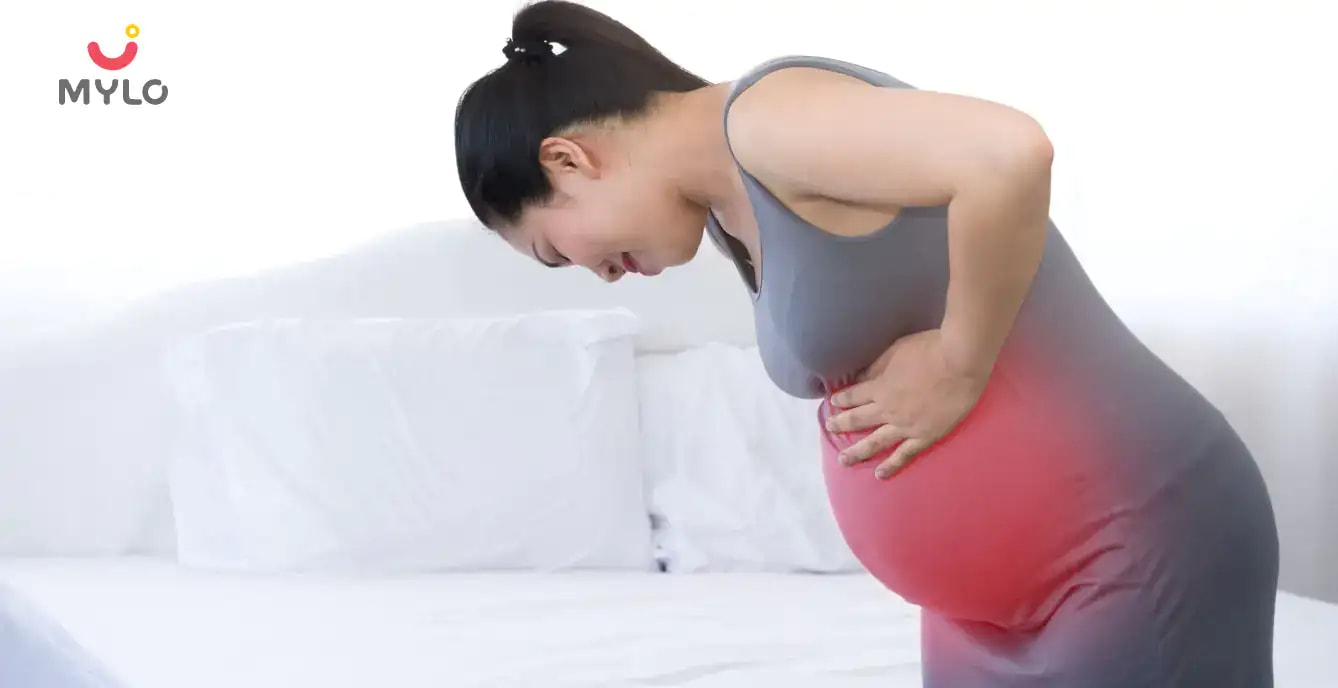
Your growing baby bump can weaken your core abdominal muscles and as a result may exert extra pressure on your back which may lead to back pain. Bending during pregnancy, especially during the later stages, may aggravate back issues.
2. Acidity or reflux
You should not bend too often, as it increases the risk of heartburn, acidity, and gastroesophageal reflux. When you curve your back then it puts an additional pressure on your stomach which may cause acid reflux.
3. Feeling dizzy
Bending down during pregnancy can lead to a quick flow of blood in the head region which may make of shaky or feeling dizzy. Dizziness increases the risk of tripping, so it is better to give a miss to bending.
4. Preterm delivery
If you lift heavy objects, stand for long hours or bend during pregnancy then there is an increased risk of preterm delivery or injury during pregnancy.
5. More prone to injuries
Your joints and ligaments become loose during pregnancy as the hormones are working to accommodate the developing baby. Bending frequently during this stage of life can expose you to the risk of injuries.
6. Accidental tripping
As the baby bump grows there is a shift in the center of gravity which makes you adjust your posture and balance. Bending during a later stage can also add to the risk of accidental tripping.
Why does my stomach hurt when I bend during pregnancy?
Mild stomach discomfort while bending is common during pregnancy due to round ligament pain, a stretching uterus, or trapped gas. However, sharp or persistent pain, bleeding, or contractions after bending need urgent medical attention. Always rise slowly and avoid sudden movements, especially in the second and third trimesters.
Stomachache may occur while bending during pregnancy as the abdominal muscles stretch to make room for the growing baby. If you are experiencing pain while bending down, then it may reflect some minor injuries to the stomach or chest muscles.
One of the most common reasons for stomachache during pregnancy while stooping down is round ligament pain due to enhanced stretching and pulling of round ligament that provides support to the uterus.
The stomachache may occur due to aggravation of gastric pain or indigestion while bending. Pregnancy hormones relax the digestive tract muscles which result in weak digestion and enhanced gas formation. You might even have abdominal pain due to discomfort related to constipation. Again, hormonal fluctuations and uterine pressure is responsible for reduced bowel movements and bending can worsen the situation.
Also, bowing down may also trigger Braxton Hicks contractions, which is a tightening feeling in the abdomen and may result in pain. If you are feeling uncomfortable or having pain, you may consult your doctor for further guidance.
Which household chores should I avoid during pregnancy?
Pregnant women should avoid household tasks that involve heavy lifting (over 10 kg), prolonged bending, climbing ladders, scrubbing floors on hands and knees, moving furniture, cleaning cat litter (toxoplasmosis risk), and using strong chemicals. Ask for help with mopping, reaching high shelves, and tasks requiring extended standing beyond 30 minutes.
You might be contemplating can we bend during pregnancy while washing clothes or mopping the floor. The answer is that you must stop continuing household tasks that require bending. Some household tasks are demanding and are not advised to perform due to the associated risks involved. Let’s discuss which household tasks to avoid during pregnancy:
-
Lifting heavy weight like a bucket full of water
-
Standing for long durations
-
Moving furniture or other fixtures
-
Washing clothes, mopping or cleaning the floor in squatting position
-
Picking the things from the floor while tiding up the house
These household tasks may put strain on your back and other body parts. In addition to the risks involved with bending, these tasks can make you drained as well.
You may also like: In What Situations Can a Doctor Recommend You to Take Bed Rest During Pregnancy?
How can I maintain good posture during pregnancy?
Keep shoulders back, chest lifted, and pelvis neutral while standing. Use a lumbar support pillow when sitting, sleep on your left side with a pregnancy pillow between knees, and wear supportive flat shoes. Practise prenatal yoga or pelvic tilts daily. Avoid standing over 30 minutes and take breaks every hour.
Good posture is the foundation of a healthy body, and this is even more true for pregnancy. Some of the tips to maintain healthy body posture during pregnancy are:
-
Avoid slouching, when you are sitting try to keep your shoulders and spine straight.
-
Your baby bump can put a lot of pressure on your back due to which sometimes woman practice slumped posture. It is best to avoid leaning forward and maintain a good body posture.
-
Do not sit cross legs as it does not support blood circulation, rather sit with your feet touching the ground or you can keep a table to rest your feet.
-
Practice a standing position in which your feet are further apart, and hips are tucked in. Try to relax your shoulders and knees and do not hunch. Keep your spine straight and avoid arching your back. You can use a pregnancy belt to support your back.
-
While sleeping it is best to turn towards your left for side as it improves blood circulation and offers a straight route from your heart to the placenta for the nourishment.
These tips will help you maintain a good posture during pregnancy and prevent extra pressure on your back. Good posture prevents the risk of tripping and other pregnancy-related complications.
You may also like: Reasons To Stop Working During Pregnancy
Final Thoughts
To sum up, bending during pregnancy can be safe during early stages of pregnancy but is associated with complications in the latter half of the pregnancy. If you are experiencing any pain or discomfort while bending down during pregnancy, then it is best to speak to your health care professional. Maintaining a good posture, avoiding physically demanding household chores and using a belt can avoid putting a lot of strain on your back. Start prioritizing your health and enjoy this beautiful phase of life.
References
1. Conder, R., Zamani, R., & Akrami, M. (2019). The Biomechanics of Pregnancy: A Systematic Review. Journal of Functional Morphology and Kinesiology.
2. Gashaw, M., Yitayal, M. M., Zemed, A., Nigatu, S. G., Kasaw, A., Belay, D. G., Aragaw, F. M., Endalew, M., Tsega, N. T., Asratie, M. H., & Janakiraman, B. (2022). Level of activity limitations and predictors in women with pregnancy-related pelvic girdle pain.
When should I stop bending during pregnancy?
Most doctors say after 20 weeks, avoid deep bending. By third trimester, use squatting or kneeling instead. Listen to your body.
Can bending during pregnancy hurt the baby?
Occasional bending is safe early on. After 20 weeks, deep/repeated bending may reduce blood flow. Baby is well-cushioned by amniotic fluid.
How to pick things up without bending in pregnancy?
Squat with knees apart, keep back straight. Use a grabber tool. Ask for help with heavy items. Never bend and twist simultaneously.
Is bending at work during pregnancy safe?
Inform your employer about pregnancy. Request desk accommodations. Avoid repeated bending after second trimester. Indian maternity benefit law covers workplace modifications.
Can bending cause miscarriage in early pregnancy?
Normal bending does not cause miscarriage. First trimester bending is generally safe. Miscarriage is caused by chromosomal issues, not bending.
 Yes
Yes
 No
No
Your parenting partner
in your pocket.
supportive community.

Your parenting partner
in your pocket.
supportive community.


Article Posted Under
Helpful Tools & Calculators
.webp&w=32&q=75)











Dr. Shruti Tanwar is well qualified and competent Obstetrician and Gynecologist with more than 4 years of experience. She is well updated and has worked and gained experience from the most prime institute of Delhi-Safdarjung Hospital. She has innate ability to listen and understand your problem and give detailed personalized advice and evidence-based treatment. She specializes in treatment for high-risk pregnancy, vaginal discharge, endometriosis, fibroids, ovarian cysts etc.
Related Articles

Related Videos
Pregnancy Yoga To Help You Move Your Body (24 Weeks!)
Pregnancy yoga for 39 weeks
Activities To Avoid During Pregnancy - Dr. Suhasini Inamdar
Pre-Pregnancy Exercises - FemFusion Fitness
A Guide to Pregnancy Exercises
Questions about this article
- Asked when 38 weeks pregnant
Hello frnds..still no pain...doctor said head fix nhi hua hai..bt vagina me pain hai aur back pain bhi... anyone having same issues??
- Asked when 23 weeks pregnant
Kon kon c chije aisi hai jo pregnancy mei gas acidity jalan karti hain... Koi btayega plz bcz mujhe aksar khane ke baad hi samagh aata hai ki is chij se gas acidity jalan ho gyi hai. Please share your knowledge
- 14 weeks pregnant
I am 13 week pregnancy. Anyone having Storione-xt tablet. It better to have morning or night ???
- Asked when 10 weeks pregnant
Hlo to be moms....i hv a query...in my 9.5 wk i feel body joint pain like in ankle, knee, wrist, shoulder, toes....pain intensity is high...i cnt sleep....what should i do pls help....cn i cosult my doc.
- Asked when 33 weeks pregnant
Influenza and boostrix injection kisiko laga hai kya 8 month pregnancy me and q lagta hai ye plz reply me
Recently Published Articles
Your body needs extra nutrition this trimester - these can help.

Tapioca (Sabudana) in Pregnancy: Is It Safe? Benefits, Recipes & Precautions

Chikoo (Sapota) in Pregnancy: Is It Safe? Benefits, Risks & Daily Limit

Anjeer (Figs) in Pregnancy: Is It Safe? Benefits, Risks & How Much to Eat

Sabja (Basil) Seeds in Pregnancy: Is It Safe? Benefits & How Much

Passion Fruit in Pregnancy: Is It Safe? Benefits, Risks & How Much
Medical Disclaimer
This content is for informational purposes only and should not replace professional medical advice. Consult with a physician or other health care professional if you have any concerns or questions about your health. If you rely on the information provided here, you do so solely at your own risk.


AWARDS AND RECOGNITION

Mylo wins Forbes D2C Disruptor award

Mylo wins The Economic Times Promising Brands 2022
AS SEEN IN












- Mylo Care: Effective and science-backed personal care and wellness solutions for a joyful you.
- Mylo Baby: Science-backed, gentle and effective personal care & hygiene range for your little one.
- Mylo Community: Trusted and empathetic community of 10mn+ parents and experts.


Product Categories
Baby Carrier | Baby Soap | Baby Wipes | Stretch Marks Cream | Baby Cream | Baby Shampoo | Baby Massage Oil | Baby Hair Oil | Stretch Marks Oil | Baby Body Wash | Baby Powder | Baby Lotion | Diaper Rash Cream | Newborn Diapers | Teether | Baby Kajal | Baby Diapers Pants | Cloth Diapers | Laundry Detergent | Lactation Granules |