


Orders

Profile

25 Best Akbar and Birbal Stories for Kids (2026): Witty Short Tales with Moral Lessons in English
 3 Likes|
 19 min
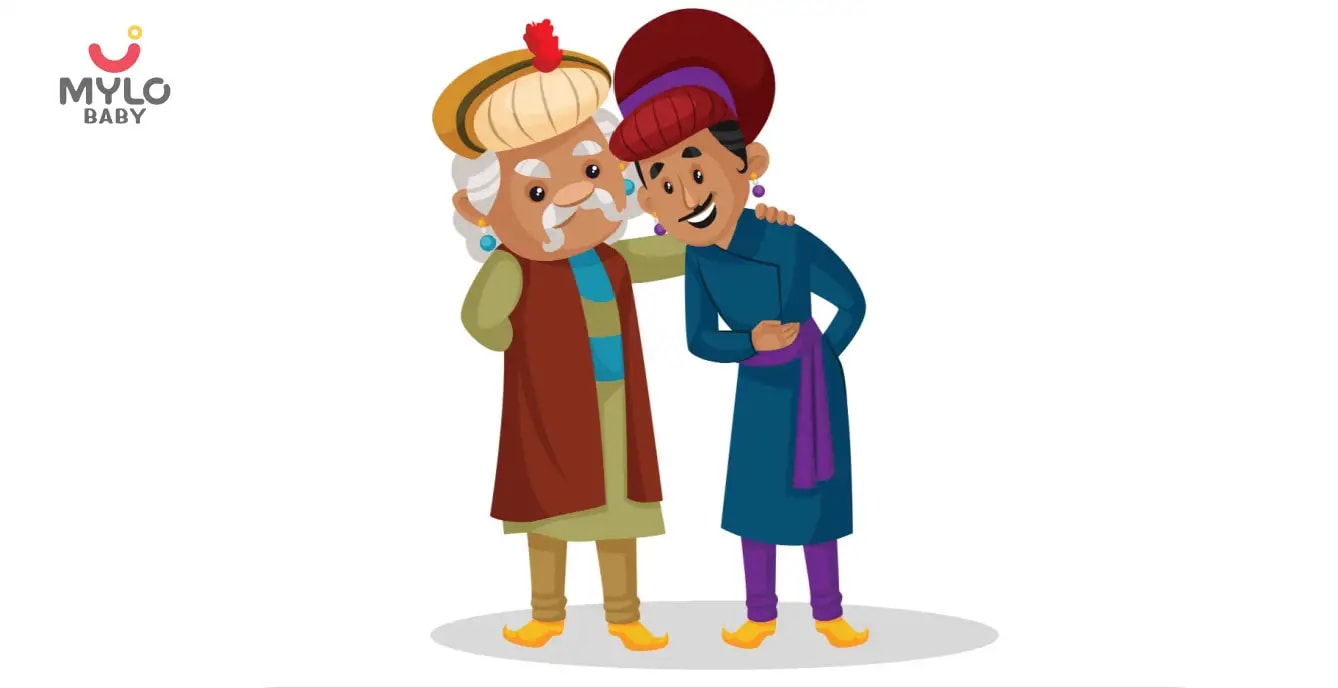
Akbar and Birbal stories are short, witty Indian folk tales from the 16th-century Mughal court - featuring Emperor Akbar and his wise advisor Birbal, who solves every puzzle through cleverness, humour, and quick thinking. Below are 25 best Akbar and Birbal stories in English - short, funny, moral, and perfect for kids ages 4–12, school assignments, and bedtime reading.
Most famous Akbar Birbal story: "Crows in Akbar's Kingdom" - Akbar asks how many crows live in his kingdom. Birbal answers: "95,463 - if there are more, the extra ones are visiting from other lands. If less, ours have gone to visit relatives."
If your kids love brain-teasers too, pair these stories with our 100+ Hindi paheliyan with answers - a perfect match for cleverness-loving children.
Who Were Akbar and Birbal?
Emperor Akbar (1542-1605) was the third Mughal emperor and one of India's greatest rulers. Raja Birbal (1528–1586) was his trusted minister, poet, and one of the Navaratnas (nine gems) of his court - celebrated for his wit, wisdom, and ability to solve any problem with humour and intelligence.
While the historical Birbal was real, the popular Akbar-Birbal stories are a mix of fact and folk tale - passed down through generations because they're both entertaining and morally rich. Every story teaches a lesson kids carry into adulthood.
What Are the Most Famous Akbar and Birbal Stories?
These are the 5 most iconic Akbar Birbal tales every Indian child grows up hearing.
1. The Crows in Akbar's Kingdom
One day, Akbar idly asked his court, "How many crows live in my kingdom?" The ministers panicked, but Birbal calmly said, "Ninety-five thousand, four hundred and sixty-three, Your Majesty."
"How can you be so sure?" asked Akbar.
Birbal smiled. "If you find more, then some crows are visiting their relatives in our kingdom. If you find fewer, our crows have gone to visit theirs."
Akbar laughed and rewarded him.
Moral: Quick thinking and confidence can solve even the most impossible questions.
2. Birbal's Khichdi
Akbar declared he'd give 1,000 gold coins to anyone who could stand in a freezing pond all night. A poor man tried - and survived. But Akbar refused to pay, claiming the man stayed warm by a lamp glowing on a distant palace tower.
Birbal didn't argue. The next day, he didn't show up to court. Akbar found him in his garden, cooking khichdi - but the pot was hung 20 feet above the fire.
"How will it ever cook?" asked Akbar.
"The same way that man got warmth from a distant lamp, Your Majesty."
Akbar realised his mistake and paid the poor man.
Moral: Justice should never be denied through clever excuses.
3. The Most Beautiful Child
Akbar once asked Birbal, "Whose child is the most beautiful in the world?"
Birbal replied, "To every mother, her own child is the most beautiful."
Akbar didn't believe him. Birbal arranged for a peacock to compare its child with a cuckoo's child. Each mother insisted hers was the prettiest - even though both knew the peacock chick was clearly more beautiful.
Moral: Love is not blind - but it is the most beautiful kind of seeing.
4. The Brinjal Story
One day, Akbar was eating brinjal and praised it. Birbal joined in: "Your Majesty, brinjal is the king of vegetables - so soft, so tasty, so wonderful!"
A few days later, Akbar didn't enjoy his brinjal and called it useless. Birbal nodded: "You're right, Your Majesty - brinjal is bitter, dull, and worth nothing."
Akbar frowned. "Just yesterday you praised it!"
Birbal smiled. "Your Majesty, I serve you, not the brinjal."
Moral: Loyalty is to people who matter, not to opinions that change.
5. Birbal Catches the Thief
A precious item was stolen from the palace. Birbal lined up all the suspects and gave each of them a stick. "These sticks are magical," he announced. "Tonight, the thief's stick will grow two inches longer."
The next morning, Birbal examined the sticks. The thief had cut his stick by two inches - believing it would grow back.
Moral: A guilty mind always gives itself away.
What Are Some Short Akbar and Birbal Stories for Kids?
Quick 1-minute tales perfect for bedtime or short attention spans. (5 stories)
6. The Talking Parrot
Akbar's beloved parrot died. Servants were afraid to tell him because he'd ordered: "Whoever brings me news of my parrot's death will be hanged."
Birbal volunteered. He went to Akbar and said, "Your Majesty, your parrot is not eating, not drinking, not opening its eyes, not flying, and not making a sound."
Akbar stared. "Birbal, my parrot is dead!"
"Your Majesty said it, not me."
Moral: Wisdom finds a way to deliver hard truths.
7. The Three Questions
A scholar visited Akbar's court and asked three impossible questions: "Where is the centre of the earth? How many stars are in the sky? Who is the bigger fool - me or you?"
Akbar called Birbal. Birbal pointed to a spot on the ground and said, "The centre of the earth is right here. Measure it if you doubt me."
Then he pointed to a sheep nearby: "There are exactly as many stars as hairs on this sheep. Count them if you doubt."
Then he smiled: "As for the third - neither. The fool is the one who travelled all this way to ask such questions."
Moral: Cleverness defeats arrogance every time.
8. Half Yours, Half Mine
A husband and wife came to Akbar fighting over property. The wife said the husband must give her half of everything. The husband refused.
Birbal called both privately and asked the husband, "Sir, do you love your wife?"
"Yes, of course."
"Then you should give her not half - but everything. Because what is half of everything you have, when she gave you a whole life of love?"
The husband apologised. The fight ended.
Moral: Marriage is not about division - it's about sharing.
9. The Pot of Gold
A poor farmer found a pot of gold while ploughing his neighbour's land. Both claimed it. Birbal asked: "Whose plough struck it first?"
The farmer said, "Mine."
The neighbour said, "It's on my land."
Birbal ruled: "The gold belongs to the king - both of you broke the rule of greed." The farmers immediately backed down and agreed to split the gold equally.
Moral: Greed turns friends into enemies - but sharing brings peace.
10. Drawing a Line Without Touching
Akbar drew a line on the floor and challenged Birbal: "Make this line shorter without touching it."
Birbal calmly drew a longer line next to it. "Your Majesty's line is now shorter."
Moral: You don't have to bring others down - you can simply rise higher.
What Are the Funniest Akbar and Birbal Stories?
These tales make kids burst into giggles. (5 stories)
11. The Donkey's Wisdom
Akbar wanted to know who was wisest in his court. Birbal said, "Your Majesty, the wisest creature in the court is - your donkey."
Akbar was furious. "What do you mean?"
"Because, Your Majesty, when you praise it for being beautiful, it doesn't get proud. When you call it a fool, it doesn't get angry. It quietly does its work. That is true wisdom."
Moral: True wisdom is staying calm in praise and criticism.
12. The Three Foolish People
Akbar asked Birbal to find him "three of the biggest fools in the kingdom."
Birbal returned weeks later with three people:
- Fool 1: A man searching for his lost camel - riding on the back of his other camel.
- Fool 2: A man who wanted to learn swimming - by reading books on dry land.
- Fool 3: Birbal himself, "because, Your Majesty, only a fool would waste the king's time looking for fools."
Akbar laughed for hours.
Moral: Sometimes the wisest thing is to admit your own foolishness.
13. The Sermon
Birbal was asked to give a sermon. He stood before the audience and asked, "Do you know what I am about to say?"
"No," said the audience.
"Then there's no point talking to people who don't know anything." He left.
The next day, he came again. "Do you know what I am about to say?"
"Yes!" the audience said, learning their lesson.
"Then there's no point talking to people who already know everything." He left again.
The third day, he asked again. The audience was split - half said yes, half said no.
"Then those who know, please tell those who don't." He left.
Moral: Wisdom belongs to those who keep learning, not to those who pretend.
14. The Best Cook
Akbar's three cooks fought over who was best. Birbal arranged a tasting. After tasting all three dishes, he announced: "The third cook is the best."
Akbar was confused: "You barely tasted his food!"
Birbal explained: "Because the first cook complained too much. The second one boasted too much. The third one quietly made his food and stepped aside. The dish that comes from a humble heart is always the best."
Moral: True excellence speaks for itself - without bragging.
15. Akbar's Dream
One morning, Akbar said, "Birbal, last night I dreamt that you fell into a dirty drain, and I fell into a pond of rosewater."
Birbal smiled: "Your Majesty, last night I had the same dream. But after that, you came to lick me clean, and I came to wash myself in the rosewater."
The court roared with laughter - Akbar himself laughed loudest.
Moral: Wit is the best response to teasing.
What Are the Best Akbar and Birbal Stories with Strong Moral Lessons?
Tales designed to build character. (5 stories)
16. The Honest Trader
Akbar disguised himself as a beggar and visited markets to find an honest trader. Most cheated him. But one trader gave him fair prices, even when he could've charged more from a "beggar."
Akbar revealed his identity and rewarded the trader with a position in his court.
Moral: Honesty is rewarded - even when no one seems to be watching.
17. The Greedy Farmer
A farmer claimed his neighbour's mango tree was half his because half its branches hung over his fence. Birbal asked: "Sir, when those branches drop dead leaves on your land, will you also accept half the leaves to clean?"
The farmer immediately withdrew his claim.
Moral: Greed loves the fruits but never the responsibilities.
18. The Wise Beggar
A beggar asked Akbar for a small daily allowance - "just enough to keep body and soul together." Akbar offered him riches. The beggar refused.
When Birbal asked why, the beggar said: "More than what I need will only bring more worry."
Akbar was so impressed he gave the beggar a permanent home in the palace gardens.
Moral: Contentment is the greatest wealth.
19. The Lazy Man and the Bread
A lazy man begged at Akbar's court daily. Birbal handed him bread one day, but the bread was hot. The lazy man dropped it and asked Birbal to feed him directly.
Birbal said: "Even bread won't reach a mouth that won't open. Earn it, and the warmth becomes a blessing."
Moral: Effort is what gives reward its meaning.
20. The Most Valuable Possession
Akbar asked his ministers, "What is the most valuable possession in life?" Some said gold. Some said power. Some said love.
Birbal said: "Time, Your Majesty. Gold can be earned again. Power can be regained. Even love returns. But once a moment passes, it's gone forever."
Moral: Time is the only thing that, once lost, can never be found.
What Are Akbar Birbal Stories Perfect for Class 3, 5, and 7 Assignments?
These tales are commonly used in school textbooks and writing assignments. (5 stories)
21. Akbar's Test of Faith
Akbar asked his court: "What is greater - God or me?"
Most ministers flattered him. Birbal said: "You are, Your Majesty."
Akbar smiled. Birbal continued: "You can banish a person from your kingdom. God can only bring them back to His. Therefore, your power is greater here."
Akbar laughed at the cleverness - but understood the deeper truth.
Moral: True greatness is never claiming superiority over God.
22. The Counting Game
Akbar challenged Birbal: "Birbal, count the leaves on this tree without missing any."
Birbal said: "Your Majesty, that's easy. There are 84,762 leaves. But if you doubt me, please count them yourself - and if I'm wrong, the difference must be the leaves blown away by yesterday's wind."
Akbar gave up.
Moral: Confidence and quick wit can win any debate.
23. The Right to Speak
A foreign ambassador insulted Akbar in court. Everyone went silent. Birbal stepped forward: "Sir, in our kingdom we believe that every dog has the right to bark - but a wise dog never bites the hand that feeds him."
The ambassador was quiet for the rest of his visit.
Moral: A clever reply silences arrogance better than anger.
24. The Three Brothers and the Inheritance
Three brothers came to Akbar with a dispute: their father had left 17 camels, with instructions that the eldest get half, the middle get one-third, and the youngest get one-ninth. 17 doesn't divide that way.
Birbal added one of his own camels to the herd, making 18:
- Eldest got 9 (half)
- Middle got 6 (one-third)
- Youngest got 2 (one-ninth)
- Total: 17 - and Birbal took his camel back.
- Moral: Sometimes giving a little of your own makes others' lives whole.
25. Birbal's Final Wisdom
When Birbal grew old, Akbar asked him: "What is the greatest lesson of your life?"
Birbal replied: "Your Majesty, three things - kindness costs nothing, honesty pays everything, and laughter heals everywhere."
Akbar wrote this on the palace wall. It remains the heart of every Akbar-Birbal tale.
Moral: Three lifelong gifts: kindness, honesty, and laughter.
How Can Kids Use Akbar Birbal Stories for School Story-Writing Assignments?
A simple 5-step framework kids can use to retell any Akbar-Birbal story for school:
- Set the scene: "One day in Emperor Akbar's court..."
- Introduce the problem: A puzzle, dispute, or challenge
- Show the conflict: Other ministers fail or get confused
- Birbal's wit: Explain Birbal's clever solution step-by-step
- End with the moral: "This story teaches us that..."
Word count tip: For Class 3, keep it 100-150 words. For Class 5–7, expand to 200-300 words with dialogues.
If your child also enjoys Tenali Raman stories or Panchatantra tales, they'll find similar wit-and-wisdom themes - perfect for comparison essays.
Why Are Akbar Birbal Stories Great for Children's Brain Development?
Pediatric experts agree that storytelling has measurable cognitive benefits, and Akbar-Birbal stories are particularly effective because they:
- Build problem-solving skills - Birbal's solutions train logical thinking
- Strengthen vocabulary - colourful old-world language enriches expression
- Develop critical thinking - "Why did Birbal do that?" sparks reasoning
- Teach moral reasoning - kids learn ethics through entertainment, not lectures
- Improve memory - story structure aids recall and recap
- Boost confidence - kids enjoy retelling clever stories to family
Pair these stories with our Top 10 Panchatantra stories, Ruskin Bond's must-read short stories, or our top 10 short moral stories for kids for a complete bedtime story library.
Frequently Asked Questions (FAQ)
Who were Akbar and Birbal?
Emperor Akbar was the third Mughal emperor of India (1542–1605). Raja Birbal was his trusted advisor and one of the Navaratnas (nine gems) of his court - famous for his wit, wisdom, and clever problem-solving. While both are real historical figures, most popular Akbar-Birbal stories are folk-tale adaptations passed down through generations.
What is the most famous Akbar Birbal story?
The most famous Akbar Birbal story is "The Crows in Akbar's Kingdom" - where Birbal cleverly answers how many crows live in the kingdom by saying "95,463 - extra ones are visiting from outside, missing ones have gone to visit relatives."
What age group are Akbar Birbal stories suitable for?
Akbar Birbal stories are perfect for kids ages 4 to 12. Younger kids enjoy the funny endings; older kids appreciate the wit and morals. They're also commonly used in school textbooks for Classes 3 to 8.
Are Akbar Birbal stories historically accurate?
The historical figures of Akbar and Birbal are real, but the stories themselves are a blend of folk tales, oral tradition, and creative additions over the centuries. They are best appreciated for their moral lessons and entertainment, not as strict history.
What moral lessons do Akbar Birbal stories teach?
Akbar Birbal stories teach honesty, wit, contentment, justice, the value of time, kindness, problem-solving, humility, and quick thinking. Each story has a clear moral that helps shape a child's character.
Are there short Akbar Birbal stories for quick bedtime reading?
Yes! Stories like "Drawing a Line Without Touching," "The Talking Parrot," and "The Pot of Gold" can be told in 60–90 seconds - perfect for quick bedtime sessions.
Can I use Akbar Birbal stories for school story-writing assignments?
Absolutely. Akbar Birbal stories are commonly assigned in Classes 3, 5, and 7. Use the 5-step framework above (set scene → problem → conflict → Birbal's wit → moral) to write any tale in 100–300 words.
What are some funny Akbar Birbal stories?
Top funny tales include "The Donkey's Wisdom," "Akbar's Dream," "The Three Foolish People," "The Sermon," and "The Brinjal Story". They make kids giggle while teaching subtle wisdom.
Where can I find Akbar Birbal stories with morals in English with pictures?
This article gives you 25 stories with morals in English. For more story collections with similar wisdom themes, see our Tenali Raman stories collection, Panchatantra ultimate guide, and Ruskin Bond stories.
How are Akbar Birbal stories different from Tenali Raman stories?
Both feature witty court advisors solving problems through cleverness — but Akbar-Birbal stories come from the Mughal North Indian tradition (16th century), while Tenali Raman stories come from the Vijayanagara South Indian tradition (15th–16th century, under King Krishnadevaraya). Both make excellent bedtime reading.
Are Akbar Birbal stories also available as riddles?
Yes! Many Akbar-Birbal stories are essentially historical riddles. If your child loves brain teasers, pair these with our 100+ Hindi paheliyan with answers — the same kind of clever puzzle-solving in a different format.
What's a good Akbar Birbal story for a 5-minute classroom presentation?
"The Three Brothers and the Inheritance" (Story #24) works perfectly - it has math, mystery, a clever solution, and a strong moral. Easy to act out or narrate within 5 minutes.
Final Thoughts: Why Every Indian Child Should Hear Akbar-Birbal Stories
Akbar-Birbal stories aren't just bedtime entertainment - they're a 300-year-old toolkit for raising clever, kind, and confident kids. Each tale teaches a life skill: how to think under pressure, how to be honest in difficult moments, and how to solve problems with humour instead of anger.
In an age of endless screens, these stories reconnect children with the magic of imagination, the joy of language, and the wisdom of generations.
So tonight, switch off the screen. Open this article. Sit with your child. Read one Akbar-Birbal story - and watch their eyes light up the way Indian children's eyes have for centuries.
👉 More clever Indian story collections to explore:
- Top 10 Tenali Raman stories you must read
- Top 10 Panchatantra stories for kids
- The ultimate guide to Panchatantra stories
- Must-read Ruskin Bond short stories
- Top 10 short moral stories for kids in English
- 100+ Hindi paheliyan (riddles) with answers
✨ May every story you share with your child plant a seed of wit, wisdom, and warmth that lasts a lifetime. ✨
 Yes
Yes
 No
No
Your parenting partner
in your pocket.
supportive community.

Your parenting partner
in your pocket.
supportive community.


Article Posted Under
Helpful Tools & Calculators

.webp&w=32&q=75)















Anupama Chadha, born and raised in Delhi is a content writer who has written extensively for industries such as HR, Healthcare, Finance, Retail and Tech.
Related Articles
The Floor Toddlers Live on and Why Keeping It Clean and Safe Matters
5·4 min Home Hygiene and the Importance of Clean Floors During Pregnancy
6·4 min Are Lactation Supplements Safe and How to Choose the Right One?
7 min How Should You Take lactomama Lactation Granules And What is The Best Time of Day to Take Them for Better Results?
7 min
Questions about this article
- Asked when 38 weeks pregnant
Hello frnds..still no pain...doctor said head fix nhi hua hai..bt vagina me pain hai aur back pain bhi... anyone having same issues??
- Asked when 23 weeks pregnant
Kon kon c chije aisi hai jo pregnancy mei gas acidity jalan karti hain... Koi btayega plz bcz mujhe aksar khane ke baad hi samagh aata hai ki is chij se gas acidity jalan ho gyi hai. Please share your knowledge
- 14 weeks pregnant
I am 13 week pregnancy. Anyone having Storione-xt tablet. It better to have morning or night ???
- Asked when 10 weeks pregnant
Hlo to be moms....i hv a query...in my 9.5 wk i feel body joint pain like in ankle, knee, wrist, shoulder, toes....pain intensity is high...i cnt sleep....what should i do pls help....cn i cosult my doc.
- Asked when 33 weeks pregnant
Influenza and boostrix injection kisiko laga hai kya 8 month pregnancy me and q lagta hai ye plz reply me
Related Topics
.webp&w=32&q=75)
Recently Published Articles
Your body needs extra nutrition this trimester - these can help.
250+ Bengali Baby Boy Names with Meanings (2026): The Ultimate Modern, Unique, Hindu & Dak Naam Collection

120+ Heart-Touching 1st Birthday Wishes for Nephew & Niece (2026): From Bua, Masi, Mama, Chacha & Every Aunt-Uncle Who Loves Them

220+ Sanskrit Baby Girl Names with Meanings (2026): The Ultimate Modern, Ancient & Goddess A-Z Collection

Blessed with Baby Boy: 120+ Heartwarming Quotes, Status, Messages & Birth Announcement Ideas (2026)

220+ Girl Baby Names in Tamil with Meanings (2026): The Ultimate Modern, Unique & A-Z Collection
Medical Disclaimer
This content is for informational purposes only and should not replace professional medical advice. Consult with a physician or other health care professional if you have any concerns or questions about your health. If you rely on the information provided here, you do so solely at your own risk.


AWARDS AND RECOGNITION

Mylo wins Forbes D2C Disruptor award

Mylo wins The Economic Times Promising Brands 2022
AS SEEN IN












- Mylo Care: Effective and science-backed personal care and wellness solutions for a joyful you.
- Mylo Baby: Science-backed, gentle and effective personal care & hygiene range for your little one.
- Mylo Community: Trusted and empathetic community of 10mn+ parents and experts.


Product Categories
Baby Carrier | Baby Soap | Baby Wipes | Stretch Marks Cream | Baby Cream | Baby Shampoo | Baby Massage Oil | Baby Hair Oil | Stretch Marks Oil | Baby Body Wash | Baby Powder | Baby Lotion | Diaper Rash Cream | Newborn Diapers | Teether | Baby Kajal | Baby Diapers Pants | Cloth Diapers | Laundry Detergent | Lactation Granules |