


Orders
.png&w=48&q=75 "login")
Profile


Wallet

Spina Bifida: Causes, Symptoms & Treatment
 1 Likes|
 9 min
9 minThe incomplete development of the fetus's spine during the initial months of pregnancy causes Spina Bifida. The condition varies, from mild with no signs and symptoms to severe with nerve damage.
What Is Spina Bifida?
If you are thinking what Spina Bifida definition is, it is a congenital disability that occurs when the spine and spinal cord don't form properly. It is a type of neural tube defect created during the initial months of pregnancy. The neural tube is the structure in a developing embryo that ultimately forms the baby's brain, spinal cord, and the tissues that enclose them.
Generally, the neural tube forms early during pregnancy and closes by the 28th day after conception. In babies with Spina bifida, a part of the neural tube doesn't close or develop properly, leading to problems in the spinal cord and the spine's bones.
Spina bifida types can vary from mild to severe, depending on the kind of defect, size, location, and complications. When necessary, early treatment for Spina Bifida includes surgery, although such a procedure doesn't always completely solve the problem. Spina bifida can develop anywhere along the backbone but is most often formed in the small of the back or further down.
Types Of Spina Bifida
There are three main Spina Bifida types:
1. Spina Bifida Occulta:
Spina Bifida Occulta is the mildest and the most widespread form of this condition. It usually only involves a minor portion of the spine and shows no signs, and doesn't require treatment. When a baby is born with Spina Bifida Occulta, the skin hides the deformity of the spinal bone. It means "a hidden spot on the spine," For many individuals with this type of Spina Bifida, the spot remains hidden. However, in some individuals, the skin overlying the bone deformity will show subtle differences, such as dimples, red or purple coloring, or a tuft of hair. Spina Bifida Occukta rarely causes problems when a child grows to adolescence since the spinal cord has become fastened to the backbone through this period in the child's life. When the growth spurt of adolescence starts, the spinal cord nerves become stretched, resulting in difficulties such as weakness and numbness in the legs, bladder infections, and incontinence.
2. Meningocele:
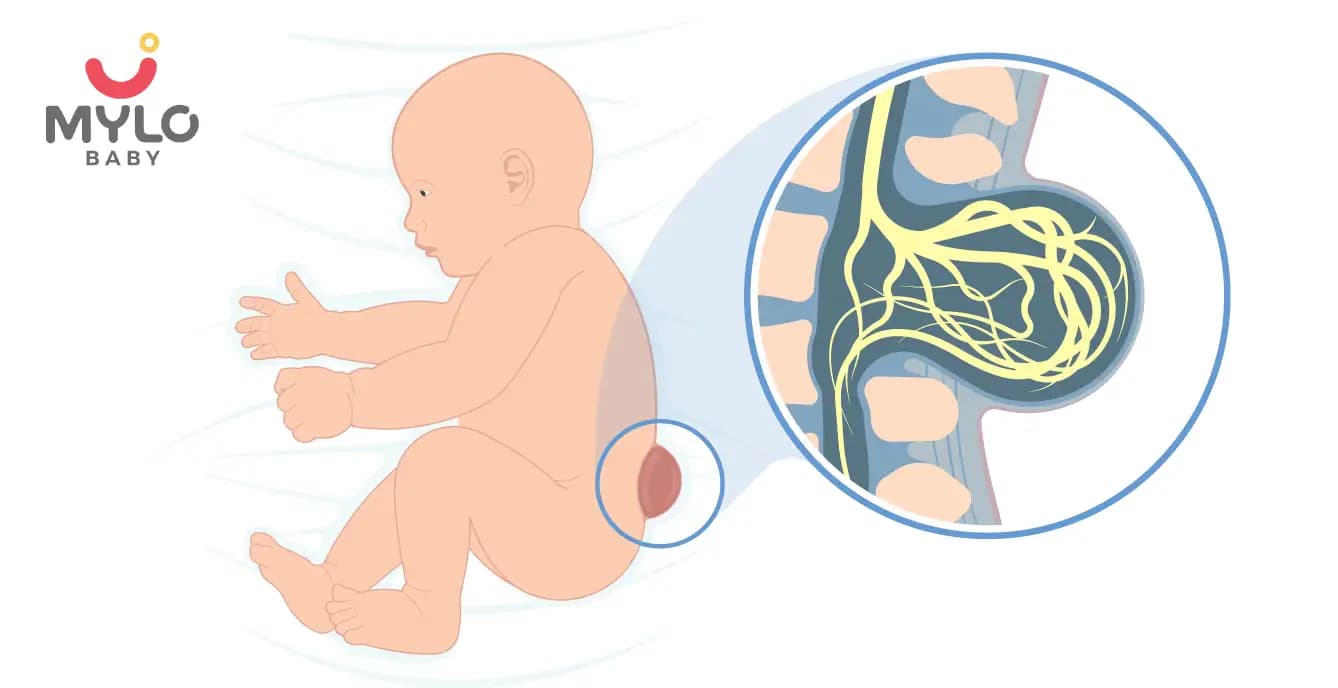
This is the least common kind of Spina Bifida, where the membrane surrounding the spinal cord( meninges) protrudes through the opening resulting in a lump or sac on the back. It is more severe compared to Spina Bifida Occulta. However, the meningocele can be repaired through surgery with little or no nerve damage. At any time during infancy, the surgery can be performed. With meningoceles, the spinal cord has typically developed and is undamaged, and the baby has no neurological condition.
3. Myelomeningocele:
Myelomeningocele is the most severe Spina Bifida, happening nearly once for every 1000 live births. The spinal cord does not form properly for babies born with a myelomeningocele, and a part of the undeveloped cord protrudes through the back. A sac containing cerebrospinal fluid and blood vessels encloses the protruding cord, usually not covered by the skin, so the nerves and tissues are exposed. Between 70% to 90% of babies born with myelomeningocele also suffer hydrocephalus due to a defect at the base of the skull. Hydrocephalus is an excess buildup of spinal fluid on the brain, leading to brain damage, seizures, or blindness if left untreated. So doctors must insert plastic shunts beneath the skin to drain excess fluid into the abdominal cavity surgically. Babies born with myelomeningocele frequently have paralysis or weakness below the point of the spinal lesion, affecting the lower limbs and issues with the bladder and bowel function. In severe cases, the trunk and upper extremities are involved.
Causes Of Spina Bifida
All of the exact Spina Bifida causes are not precisely understood. However, it includes a combination of genetics and environmental factors. A baby born with Spina Bifida may not have any relatives with this condition, even though genetics play an aspect. Lack of folic acid, also known as vitamin B9, is believed to play a role in Spina Bifida. Other factors include obesity, diabetes in the mother that is not well controlled, and some medications and drugs.
Symptoms Of Spina Bifida
The symptoms and signs of Spina Bifida are different for each type and can vary from person to person within each kind.
1. The symptoms of Spina Bifida Occulta include:
-
A void between the vertebrae.
-
No visible outside opening.
-
No fluid sack is present outside the body.
-
Small birthmark or dimple on the back.
-
A small group of hair on the back.
-
A region of extra fat on the back.
2. The symptoms of Meningocele include:
-
Small opening on the back.
-
A visible sac at birth.
-
Membranes push out through the opening in the vertebrae into the sack.
-
The natural development of the spinal cord.
3. The symptoms of Myelomeningocele include:
-
Opening in the spinal cord over some vertebrae, usually in the middle or lower part of the back.
-
In an exposed or skin-covered sack, membranes and the spinal cord are pushed outside the back.
-
Unstable or paralyzed leg muscles.
-
Seizures.
-
Impaired feet.
-
Hips that are not even.
-
Curved spine.
-
Problems with the bowel and the bladder.
Risks Of Spina Bifida
Spina Bifida is more prevalent among white people and Hispanics, and females are more affected than males. Some risks factors associated with Spina Bifida are as follows:
-
Folate deficiency increases the chance of Spina Bifida and other neural tube defects.
-
Family history of neural tube defects.
-
Some medications, such as anti-seizure medicines like valproic acid, cause neural time defects during pregnancy.
-
Women with diabetes who don't have well-controlled blood sugar levels have a greater risk of having a baby with Spina Bifida.
-
Pre-pregnancy obesity is linked with an increased risk of congenital neural tube disabilities.
-
Increased body temperature in the early weeks of pregnancy may increase the risk of Spina Bifida, as some evidence suggests.
How To Diagnose Spina Bifida
Spina Bifida can usually be detected in the foetus, but not always. Some test includes:
-
A blood test during the 16th and 18th week of pregnancy can show the amount of AFP in the blood. The level is higher in about 75% to 80% of women who carry a foetus with Spina Bifida.
-
An ultrasound can detect problems with the foetus's spine through imaging.
-
Amniocentesis: Fluid from the woman's uterus is removed through a tube to test for protein levels.
Treatment For Spina Bifida
Because it involves nerve damage, more severe types of Spina Bifida cannot be cured. Children with severe cases of Spina Bifida must understand mobility skills and need training to manage their bowel and bladder functions. Surgery, physiotherapy, and medication are used to treat some of the consequences of Spina Bifida and may be required throughout a patient's life to prevent and manage specific complications.
Complications Related To Spina Bifida
Spina Bifida may cause minimal symptoms or minor physical issues. The list of possible complications may seem overwhelming, but not all children get all these complications, which include:
-
Walking and mobility issues.
-
Orthopedic complications
-
Bowel and bladder issues.
-
Accumulation of fluid in the brain.
-
Shunt malfunction.
-
Chiari malformation type 2.
-
Infection in the tissues enclosing the brain.
-
Tethered spinal cord.
-
Sleep-disordered breathing problems.
-
Skin issues.
-
Latex allergy.
-
Other difficulties.
How To Prevent Spina Bifida
Even though the exact cause is unknown, experts believe Spina Bifida can be avoided with some simple measures to follow:
-
Folic acid is vital in preventing Spina Bifida, often found in green leafy vegetables. So during childbearing years, women should consume a vitamin with 400 mcg of folic acid every day. Some studies suggest that if women consume this dosage of folic acid, the occurrence of Spina Bifida can be reduced by 75%.
-
Talk to your doctor if you take any prescriptions, over-the-counter drugs, herbal and dietary supplements, and vitamins.
-
Treat fever immediately with paracetamol.
-
Avoid using hot tubs or saunas that overheat your body during pregnancy.
-
If you have diabetes or obesity, be sure to do your best to manage these situations while you're pregnant.
Living With Spina Bifida
Spina Bifida can range from mild to severe. Some individuals may have little to no disability. However, some people may be limited in how they move or function. Some individuals may even be paralyzed or unable to walk or move certain body parts. Even so, with the proper care, most people affected by Spina Bifida lead entire and productive lives.
Summary
With proper treatment and management of Spina Bifida, even people with severe types can live productive lives. If you develop Spina Bifida, staying in contact with your doctor to track any modifications or other medical conditions that may arise throughout your life is essential. They will assist you in continuing to manage your Spina Bifida effectively.
Article Posted Under
Related Articles
Baby Names Starting With A for Boys & Girls: Meanings, Religion, Rashi & Nakshatra
 8 min
8 min How to Swaddle a Baby: A Step-by-Step Guide With Safety Tips
 8 min
8 min What Is Fundal Height? Meaning, Normal Range by Week and Why It Matters
 7 min
7 min Diet for a Breastfeeding Mother: Protein, Milk Supply, and What Indian Moms Actually Need
17 min
Related Topics
.webp&w=32&q=75)
Medical Disclaimer
This content is for informational purposes only and should not replace professional medical advice. Consult with a physician or other health care professional if you have any concerns or questions about your health. If you rely on the information provided here, you do so solely at your own risk.


AWARDS AND RECOGNITION

Mylo wins Forbes D2C Disruptor award

Mylo wins The Economic Times Promising Brands 2022
AS SEEN IN













- Mylo Care: Effective and science-backed personal care and wellness solutions for a joyful you.
- Mylo Baby: Science-backed, gentle and effective personal care & hygiene range for your little one.
- Mylo Community: Trusted and empathetic community of 10mn+ parents and experts.


Product Categories
Baby Carrier | Baby Soap | Baby Wipes | Stretch Marks Cream | Baby Cream | Baby Shampoo | Baby Massage Oil | Baby Hair Oil | Stretch Marks Oil | Baby Body Wash | Baby Powder | Baby Lotion | Diaper Rash Cream | Newborn Diapers | Teether | Baby Kajal | Baby Diapers Pants | Cloth Diapers | Laundry Detergent | Lactation Granules |