


Orders

Profile


Wallet

Newborn Baby Skin Care: Daily Routine, Safe Products and Tips
 19 Likes|
 13 min
Quick Answer
Newborn baby skin care is simple: bathe 2 to 3 times a week in lukewarm water, use a small amount of mild, fragrance-free cleanser only where needed, pat dry, and moisturise dry patches with a fragrance-free product. Change nappies promptly, keep nails short, avoid talc and kajal, and keep babies under 6 months out of direct sun.
Newborn skin can look dry, blotchy, spotty or peeling in the first weeks, and every relative seems to have a different oil, powder or ubtan to suggest. The good news is that your baby’s skin needs much less than the shelves of baby products suggest. This guide gives you a simple daily routine, a list of what to buy and what to skip, and the signs that mean you should see a doctor.
What is the best skin care routine for a newborn baby?
The best routine is gentle and minimal. Use as few products as possible, all mild and fragrance-free, and focus on keeping the skin clean, dry in the nappy area and moisturised where it is dry.
When | What to do |
|---|---|
Every day | Wipe the face, neck folds, hands and nappy area with warm water and soft cotton. Pat dry. |
Every nappy change | Clean with plain water or fragrance-free wipes, pat dry, apply a thin layer of barrier cream if the skin is red. |
2 to 3 times a week | A short bath in lukewarm water. Sponge bath until the cord stump falls off. |
After a bath, if needed | Apply a fragrance-free moisturiser to dry areas. |
Weekly or when sharp | Trim or file nails. |
Before first use | Wash new clothes, sheets and towels in fragrance-free detergent. |
Sources: American Academy of Dermatology (AAD); NHS
For a step-by-step version you can follow every day, see our daily skin care routine for babies.
How should I bathe my newborn?
Bathing 2 to 3 times a week is enough for a newborn, according to the American Academy of Dermatology. More frequent baths can dry out delicate skin.
Until the cord stump falls off: give sponge baths only, then switch to tub baths once the area has healed.
Water: lukewarm, not hot. Test it with your elbow or wrist.
Cleanser: use a mild, fragrance-free baby wash, and only on areas that get dirty, like neck folds and the nappy area. Rinse well.
Drying: pat gently with a soft towel, paying attention to skin folds under the chin, arms and thighs.
Between baths: “top and tail” by wiping the face, neck, hands and bottom with warm water, as the NHS suggests.
Read our full guide to bathing your baby for more.
Should I moisturise my newborn’s skin?
Only if the skin looks dry. Many newborns have some dry or peeling skin in the first weeks, which usually settles on its own. If your baby’s skin is dry, apply a thin layer of a fragrance-free moisturiser after the bath.
Choose a plain, fragrance-free cream or lotion with few ingredients, as the AAP advises.
Avoid olive oil on baby skin. The NHS says olive oil and peanut oil may not suit babies’ skin, and a study found olive oil weakened the skin barrier.
Avoid nut oils if there is a nut allergy in the family. Peanut oil can appear as “arachis oil” on labels.
If your baby has rough, red, itchy patches that keep coming back, it may be eczema. Read about eczema in babies and see your doctor.
If you massage your baby, our guide to the benefits of baby massage covers which oils are gentlest.
How do I care for the nappy area?
Keeping the nappy area clean and dry is the best way to prevent nappy rash. The NHS recommends:
Change wet or dirty nappies as soon as possible.
Clean with plain water or fragrance-free, alcohol-free wipes, and pat dry rather than rubbing.
Give your baby some nappy-free time when you can.
Make sure nappies fit well without being too tight.
Apply a thin layer of barrier cream at each change if the skin is red. The AAD suggests a zinc oxide cream.
Avoid soap, baby lotion, bubble bath, talcum powder and antiseptic creams on the nappy area.
See our guide on how often to change your baby’s nappy.
How do I care for my baby’s face, eyes, scalp and nails?
Face and eyes: wipe each eye with a fresh piece of cotton dipped in warm water, from the inner corner outwards. Clean around the ears, never inside.
Kajal and surma: avoid them. The AAP warns that kohl, kajal and surma can contain lead and other heavy metals.
Scalp and cradle cap: yellowish, greasy scales on the scalp are called cradle cap. They are harmless and usually clear on their own within a few months. The NHS suggests gently massaging a moisturiser or coconut oil into the scalp, brushing softly with a baby brush, and washing with baby shampoo. Do not pick at the scales.
Nails: babies’ nails grow fast and can scratch the face. The AAD suggests trimming them in good light whenever they feel sharp, and filing them smooth with an emery board.
How do I protect my baby’s skin in Indian weather?
Babies cannot control their body temperature as well as adults, so heat and sun need extra care, especially in Indian summers.
Heat rash: small, raised, prickly spots, often on the neck, chest and back. The NHS advises loose cotton clothes, light bedding, a cool room, and plenty of feeds. Cool the skin with a damp cloth and avoid perfumed products.
Sun: keep babies under 6 months in the shade. Use clothes that cover the arms and legs and a wide-brimmed hat. The AAD says to minimise sunscreen in babies under 6 months, and if shade is not possible, apply a small amount of a mineral sunscreen with zinc oxide or titanium dioxide to uncovered skin.
Winter and dry weather: dry skin is more common. A fragrance-free moisturiser after bathing helps, and avoid very hot bath water.
Laundry: wash clothes, sheets and blankets in fragrance-free detergent before first use, as the AAD advises.
Which baby skin care products do I actually need?
Newborns need far fewer products than most baby kits contain. Start with the basics, and add only what your baby’s skin needs.
Product | Do you need it? |
|---|---|
Mild, fragrance-free baby wash or shampoo | Yes, a small amount for baths |
Fragrance-free moisturiser (cream or lotion) | Only for dry skin |
Zinc oxide barrier cream | Yes, for the nappy area if it gets red |
Fragrance-free baby wipes or soft cotton | Yes |
Fragrance-free laundry detergent | Helpful |
Massage oil | Optional. Choose plain, unscented oil. |
Baby face cream | Usually not needed |
Baby powder | Not needed. Avoid talc completely. |
Perfumed lotions, colognes or bubble bath | Avoid |
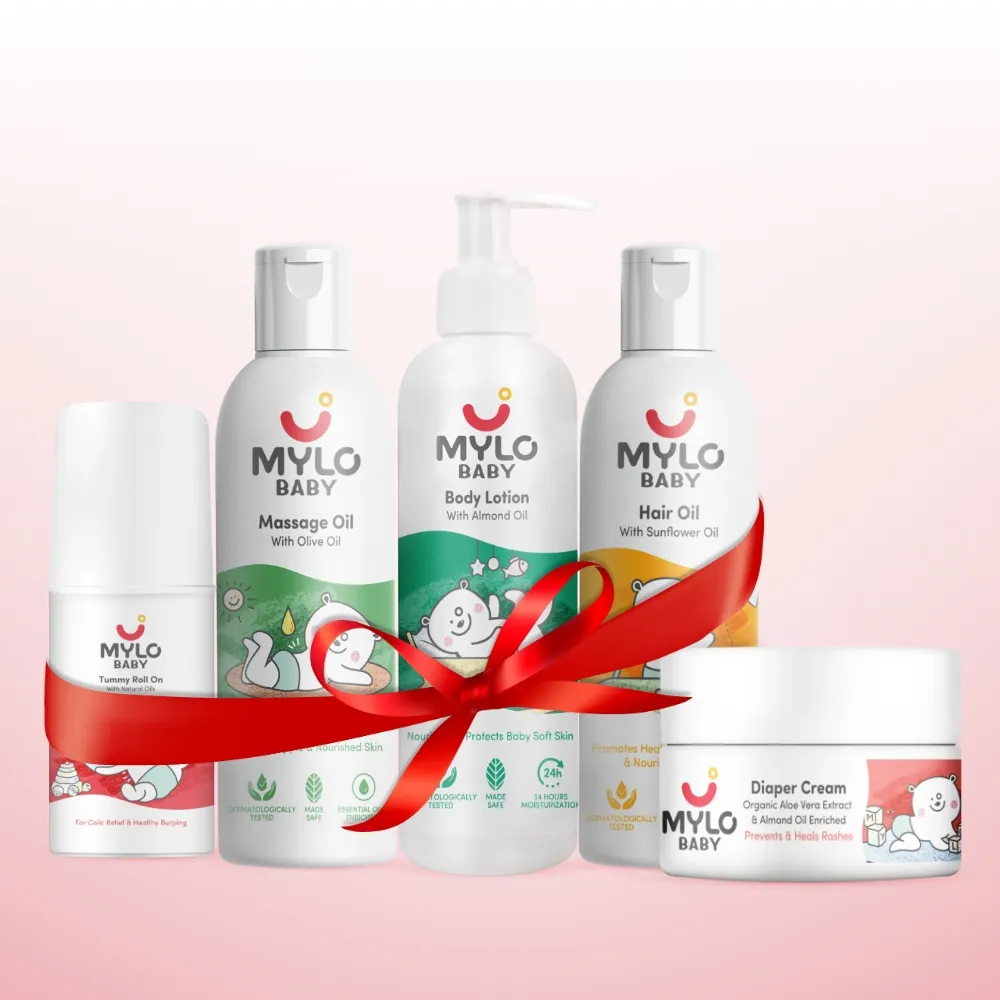
If you choose to buy, Mylo’s baby body wash and shampoo and baby moisturising lotion are options. Always check the label for fragrance and do a small patch test on your baby’s arm first.
Ingredients to avoid in baby products
The AAP recommends avoiding:
Fragrance or “parfum”: can hide phthalates, which may interfere with hormones
Parabens: in shampoos and other products
Talc: talc-based powders may contain asbestos fibres, and inhaling powder can cause serious lung problems in babies. The AAP advises not using baby or talcum powder on infants.
Antibacterial agents such as benzalkonium chloride or chloroxylenol in soaps
Kajal, surma and some imported cosmetics that may contain lead
Oxybenzone in sunscreens. Choose mineral sunscreens instead.
Nut and seed oils if your child has a nut or seed allergy
Look instead for fragrance-free products with short, simple ingredient lists, and zinc oxide nappy creams.
What newborn skin changes are normal?
Many skin changes in the first weeks are normal and settle without treatment:
What you see | What it is |
|---|---|
Dry, peeling skin, especially on hands and feet | Normal in the first weeks. See our guide to newborn skin peeling. |
Tiny white spots on the nose and cheeks | Milia, which disappear over a few weeks |
Pink patches on eyelids or back of the neck | Salmon patches or stork bites, a common birthmark |
Blue-grey patches on the lower back | Blue-grey spots, common in Indian babies, which fade over time |
Yellow, greasy scales on the scalp | Cradle cap |
Small prickly red spots in hot weather | Heat rash |
For other marks, see our guide to birthmarks in babies.
When should I see a doctor about my baby’s skin?
See your paediatrician if your baby has:
A rash with a fever, or a rash and your baby seems unwell or is not feeding well
Yellow skin or eyes, especially in the first 24 hours, or yellow that is spreading
Blisters, pus-filled spots, crusting or skin that looks infected
Nappy rash that is not improving, is spreading, or comes with a high temperature
Red, dry, itchy patches that keep coming back
Cradle cap that bleeds, leaks fluid, looks swollen or spreads widely
A rash after using a new product, which spreads or does not settle when you stop the product
Sources: NHS, nappy rash; NHS, cradle cap; NHS, heat rash
Frequently asked questions
What is the best skin care routine for babies?
The best routine is short and gentle: wipe the face, neck folds and nappy area daily with warm water, bathe 2 to 3 times a week with a mild, fragrance-free wash, pat dry, and moisturise only dry patches. Change nappies promptly, use a zinc oxide cream if the nappy area is red, and keep nails short. Fewer products usually means fewer skin problems.
How can I best care for my baby’s skin?
Keep it clean, dry in the folds and nappy area, and protected. Use lukewarm water, fragrance-free products, soft cotton clothes washed in mild detergent, and keep your baby out of direct sun and overheating. Avoid talc, kajal, perfumed products and olive oil, and see your doctor for rashes that do not settle.
What is the best skin care for babies?
The best skin care for babies uses as few products as possible, all mild and fragrance-free. A gentle baby wash, a plain fragrance-free moisturiser for dry skin and a zinc oxide nappy cream cover most needs. Choose products with short ingredient lists, avoid talc, fragrance, parabens and antibacterial soaps, and patch test anything new.
How often should I bathe my newborn?
Two to three times a week is enough, according to the AAD. Give sponge baths until the umbilical cord stump falls off. On other days, simply wipe the face, neck, hands and nappy area with warm water.
Is baby powder safe for newborns?
Powder is not needed for newborn skin care. The AAP advises not using talcum powder on babies, because inhaling it can cause serious lung problems. Cornstarch powders avoid talc but can still irritate the airways if breathed in. Read more in our guide on whether talc is dangerous for babies.
Can I use coconut oil on my newborn’s skin?
Coconut oil is a common choice in Indian homes, and the NHS mentions it for loosening cradle cap. Use pure, unscented coconut oil, keep it away from the eyes and the cord stump, and do a small patch test first. Our article on using coconut oil on baby skin has more detail.
Is it okay to apply kajal to my baby’s eyes?
It is best to avoid it. Kajal and surma can contain lead and other heavy metals, as the AAP warns, and nothing needs to go into a newborn’s eyes. If your family wants to keep the tradition, talk to your paediatrician about safer ways to do it.
Can I use adult soap or shampoo on my baby?
It is better not to. Adult soaps and shampoos often contain fragrance, strong cleansers and antibacterial agents that can dry or irritate a baby’s skin. Use a mild, fragrance-free baby wash, and only on areas that need it.
References
American Academy of Dermatology. Baby care: skin, hair and nails.
American Academy of Pediatrics, HealthyChildren.org. How to choose safer personal care products.
NHS. Nappy rash.
NHS. Cradle cap.
NHS. Heat rash.
MSD Manual Consumer Version. Common birthmarks and minor skin markings in newborns.
Danby SG, et al. Effect of olive and sunflower seed oil on the adult skin barrier: implications for neonatal skin care. Pediatric Dermatology, 2013.
Disclaimer: This article is for general information and does not replace advice from your paediatrician or dermatologist. If you are worried about your baby’s skin, contact your doctor.

Article Posted Under




Medical Disclaimer
This content is for informational purposes only and should not replace professional medical advice. Consult with a physician or other health care professional if you have any concerns or questions about your health. If you rely on the information provided here, you do so solely at your own risk.


AWARDS AND RECOGNITION

Mylo wins Forbes D2C Disruptor award

Mylo wins The Economic Times Promising Brands 2022
AS SEEN IN












- Mylo Care: Effective and science-backed personal care and wellness solutions for a joyful you.
- Mylo Baby: Science-backed, gentle and effective personal care & hygiene range for your little one.
- Mylo Community: Trusted and empathetic community of 10mn+ parents and experts.


Product Categories
Baby Carrier | Baby Soap | Baby Wipes | Stretch Marks Cream | Baby Cream | Baby Shampoo | Baby Massage Oil | Baby Hair Oil | Stretch Marks Oil | Baby Body Wash | Baby Powder | Baby Lotion | Diaper Rash Cream | Newborn Diapers | Teether | Baby Kajal | Baby Diapers Pants | Cloth Diapers | Laundry Detergent | Lactation Granules |