


Orders

Profile


Wallet

Pear (Nashpati) in Pregnancy: Is It Safe? Benefits, Risks and How Much to Eat
 11 Likes|
 10 min


M.Sc in Food & Nutrition, Post Graduation Diploma in Dietetics · 8 years experience
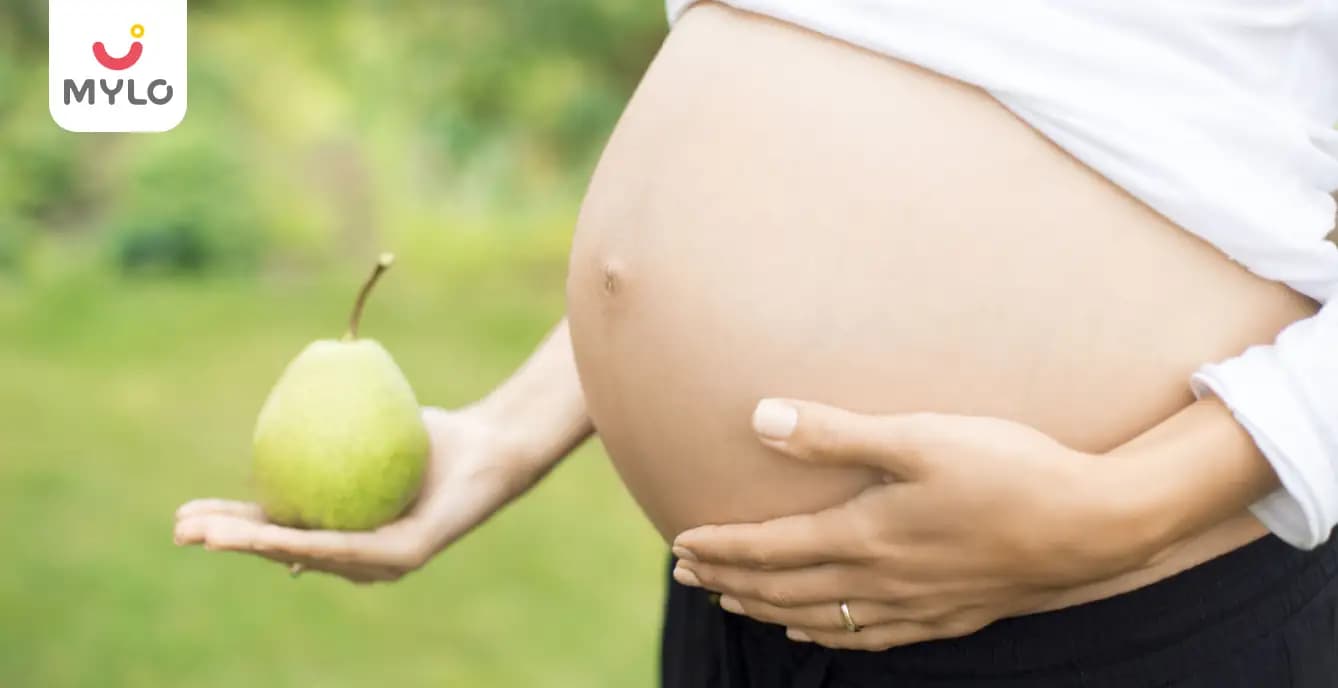
Key Takeaways
Quick overview in 30 seconds
- Pears (nashpati) are safe and beneficial during pregnancy, offering 6g fibre, vitamin C, folate, potassium, and antioxidants that support immunity, fetal development, and healthy weight management.
- Eating 1-2 medium pears daily can relieve constipation, flush toxins, satisfy sweet cravings without excess calories, and provide steady energy through natural sugars and 84% water content.
- Wash pears thoroughly to avoid pesticide exposure, eat with the skin for maximum fibre, and avoid overeating as sorbitol may cause bloating, gas, or diarrhoea.
- Looking for nutrient-rich support during pregnancy? Explore our Pregnancy Massage Oil + Coconut Oil - 200 ml each.

 4.2
Quick Answer
Yes, pears (nashpati) are safe to eat in all three trimesters of pregnancy. A medium pear gives about 101 kcal and 5.5 g of fibre, which can help with constipation, and it is about 84 percent water. Wash it well, eat it with the skin, and start with one a day to avoid gas or loose stools.
If you are craving something sweet and crunchy and a nashpati is within reach, you can relax: pears are one of the gentlest fruits you can eat while pregnant. This guide explains what a pear really gives you, what it does not, how much is sensible, and when to be careful.
Is It Safe to Eat Pears During Pregnancy?
Pears are safe in all three trimesters when washed and eaten in normal amounts. The NHS says most fruits are safe to eat in pregnancy as long as they are washed thoroughly, because soil can carry bacteria that may make you unwell.
There is no evidence that pears cause miscarriage or harm the baby. The only practical cautions are gas or loose stools if you eat a lot at once, and washing the fruit properly.
What Nutrients Does a Pear Contain?
A pear is mostly water and fibre, with small amounts of vitamin C, potassium and folate. The figures below come from the USDA FoodData Central entry for raw pears, which lists a medium pear at about 178 g.
Nutrient | Per 100 g | Per medium pear (178 g) |
Water | 84 g | About 149 g |
Energy | 57 kcal | About 101 kcal |
Fibre | 3.1 g | About 5.5 g |
Total sugars | 9.8 g | About 17.4 g |
Fructose | 6.4 g | About 11.4 g |
Vitamin C | 4.3 mg | About 7.7 mg |
Potassium | 116 mg | About 206 mg |
Folate | 7 mcg | About 12.5 mcg |
Iron | 0.18 mg | About 0.3 mg |
The honest picture is that pears are a good source of fibre and water, but not a significant source of folate, iron or vitamin C. A systematic review of pears and health also notes that no human feeding studies on pears have yet been done, so many claims you may read online (detox, immunity boosting, fetal development) are not backed by direct evidence.
What Are the Real Benefits of Pears in Pregnancy?
The genuine benefits of pears are gentle ones: more fibre, more fluid, and a sweet snack that is lighter than mithai or biscuits.
Help with constipation. Constipation is common in pregnancy. The NHS says fruit and vegetables provide fibre, which helps digestion and can help prevent constipation. The pear review explains that pears’ high fibre and fructose probably account for their laxative effect.
Hydration. At about 84 percent water, a pear adds fluid on days when nausea makes plain water hard to drink.
A lighter sweet treat. A medium pear has about 101 kcal, so it can satisfy a sweet craving in place of high-sugar snacks.
Variety in your diet. The NHS recommends at least 5 portions of a variety of fruit and vegetables a day in pregnancy. A pear is one easy, seasonal way to get there.
How Many Pears Can You Eat a Day During Pregnancy?
There is no official limit for pears in pregnancy. One medium pear a day is a sensible starting point, and two is usually fine if your stomach is comfortable.
Form | A sensible portion | Why |
Fresh pear | 1 medium pear, up to 2 a day | About 5.5 g fibre each; easy on the stomach for most women |
Pear with gestational diabetes | Half to 1 pear, with a meal | About 17 g sugar per medium pear; spreading it out helps |
Pear juice | Avoid or keep occasional | Juice loses the fibre and its sugar is absorbed quickly |
Canned pears | Choose ones in juice, not syrup | Syrup adds a lot of extra sugar |
If you get gas, cramps or loose stools, cut back. The fibre and fructose that help constipation can upset a sensitive stomach in larger amounts.
What Are the Possible Side Effects of Pears?
In normal amounts, pears rarely cause problems. Eating a lot at once can upset your stomach.
Gas and bloating. Pears are high in fructose and fibre, which gut bacteria ferment.
Loose stools. The same fibre and fructose that ease constipation can cause diarrhoea in larger amounts.
Blood sugar. A medium pear has about 17 g of natural sugar. This matters most if you have gestational diabetes.
Food safety. Unwashed fruit can carry soil and bacteria. Wash pears under running water before eating, and keep pre-cut, packaged fruit chilled.
Can You Eat Pears If You Have Gestational Diabetes?
Usually yes, because whole fruit is part of the diet advised for gestational diabetes. The NHS suggests eating plenty of fruit and vegetables, swapping sugary snacks for fruit, and being careful with fruit juices and smoothies, which can be high in sugar.
In practice, that means a whole pear with the skin rather than juice, eaten with a meal or with a handful of nuts or some curd, and not several at once. Your dietitian and your glucose readings will show what suits you.
How Should You Choose, Store and Eat Pears?
Pick pears that yield slightly to gentle pressure near the stem: very hard pears are not yet ripe, and very soft or bruised ones are past their best. Ripen firm pears at room temperature, then keep ripe ones in the fridge and eat them within a few days.
Easy ways to enjoy them:
Fresh slices with the skin, washed well, as a mid-morning or evening snack.
Pear and curd bowl with a sprinkle of roasted seeds.
Pear in your oats or dalia for breakfast.
Stewed pear with a little cinnamon if raw fruit feels heavy.
Pear slices with peanut butter for a snack with some protein.
When Should You Talk to Your Doctor?
Pears themselves are rarely the problem, but some symptoms need medical attention whatever the cause. Call your doctor if:
You have diarrhoea or vomiting for more than 48 hours, or cannot keep fluids down.
You feel dizzy, are passing very little urine, or notice signs of dehydration.
Your lips, tongue or throat swell, or you have difficulty breathing after eating any food (this needs emergency care).
You have severe or constant tummy pain, or bleeding.
Constipation lasts more than a week despite diet changes, or you see blood in your stool.
Your blood sugar readings stay above your target.
Frequently Asked Questions
What foods should I avoid during pregnancy?
The NHS advises avoiding unpasteurised milk and dairy, raw or undercooked meat, raw eggs that are not certified safe, liver, raw fish and shellfish, shark, swordfish and marlin, alcohol, and herbal teas containing liquorice root. It also advises limiting caffeine to 200 mg a day and oily fish to 2 portions a week. Most fruits, including pears, are safe once washed. If you have had a tummy upset after eating out, read our guide on food poisoning during pregnancy.
What are 10 things a pregnant woman needs?
Ten things that make the biggest difference in pregnancy are:
Regular antenatal check-ups with your doctor.
A folic acid supplement: the NHS recommends 400 micrograms a day for the first 12 weeks.
Vitamin D: the NHS recommends 10 micrograms a day.
Iron, if your doctor finds it is low on your blood tests.
A varied diet with at least 5 portions of fruit and vegetables a day.
Enough water through the day.
Rest and good sleep.
Gentle activity, as your doctor advises.
No alcohol, no smoking, and no more than 200 mg of caffeine a day.
Emotional support from your partner, family or a counsellor.
Your doctor may suggest other supplements based on your health, so follow their advice.
Does pear contain folic acid?
Pears contain a small amount of folate, the natural form of folic acid: about 12.5 micrograms in a medium pear, according to USDA data. That is only about 3 percent of the 400 micrograms of folic acid the NHS recommends daily in early pregnancy. The NHS says it is difficult to get enough from food alone, so keep taking the folic acid your doctor prescribes.
Is pear fruit heat or cold for the body?
In many Indian homes, foods are called “hot” (garam) or “cold” (thanda) based on traditional beliefs. This is not a medical classification, and there is no scientific evidence that pears heat or cool the body in a way that affects pregnancy. Nutritionally, a pear is mostly water and fibre, and you can enjoy it in any season.
Is it safe to eat pear skin when pregnant?
Yes. The skin is safe and adds fibre. Just wash the pear well under running water before eating.
Can pears help with constipation in pregnancy?
They can. Pears are high in fibre and fructose, which together have a mild laxative effect. Drink enough water as well, and see our guide on constipation in early pregnancy for more tips.
Are pears safe in the first trimester?
Yes. Pears are safe from the first trimester onwards, and their mild taste and high water content can be easier to manage when you feel nauseous. They do not replace your folic acid supplement.
Final Thoughts
Pears are a safe, refreshing and fibre-rich fruit in pregnancy, but they are one helpful part of a varied diet, not a superfood. Enjoy one a day when you feel like it, eat it with the skin, and keep taking the supplements your doctor has prescribed. If you like trying different fruits, our guides on plums in pregnancy and pomegranate during pregnancy may help.
References
USDA FoodData Central. Pears, raw (FDC 169118).
Reiland H, Slavin J. Systematic Review of Pears and Health. Nutrition Today, 2015.
Loved by Mamas Nourishing Their Pregnancy Journey
Pair wholesome fruits like pears with gentle prenatal essentials that support digestion, immunity, and your growing baby's healthy development.



Article Posted Under
Related Articles
Apricot (Jardalu) in Pregnancy: Benefits, Fresh vs Dried, and Safety
 20·14 min
Custard Apple During Pregnancy: Benefits & Risks
 44·6 min
Radish During Pregnancy: Benefits, Risks & Safe Consumption Guide (2026)
 17·7 min
Papaya (Papita) In Pregnancy: Ripe Vs Unripe, Daily Limit, Trimester Guide, And The Truth About Miscarriage Risk For 2026
 1·19 min
Related Topics

Medical Disclaimer
This content is for informational purposes only and should not replace professional medical advice. Consult with a physician or other health care professional if you have any concerns or questions about your health. If you rely on the information provided here, you do so solely at your own risk.


AWARDS AND RECOGNITION

Mylo wins Forbes D2C Disruptor award

Mylo wins The Economic Times Promising Brands 2022
AS SEEN IN













- Mylo Care: Effective and science-backed personal care and wellness solutions for a joyful you.
- Mylo Baby: Science-backed, gentle and effective personal care & hygiene range for your little one.
- Mylo Community: Trusted and empathetic community of 10mn+ parents and experts.


Product Categories
Baby Carrier | Baby Soap | Baby Wipes | Stretch Marks Cream | Baby Cream | Baby Shampoo | Baby Massage Oil | Baby Hair Oil | Stretch Marks Oil | Baby Body Wash | Baby Powder | Baby Lotion | Diaper Rash Cream | Newborn Diapers | Teether | Baby Kajal | Baby Diapers Pants | Cloth Diapers | Laundry Detergent | Lactation Granules |