


Orders

Profile


Wallet

C-Section Delivery: Reasons, Procedure and What to Expect
 37 Likes|
 15 min

MBBS, DGO · 38 years experience
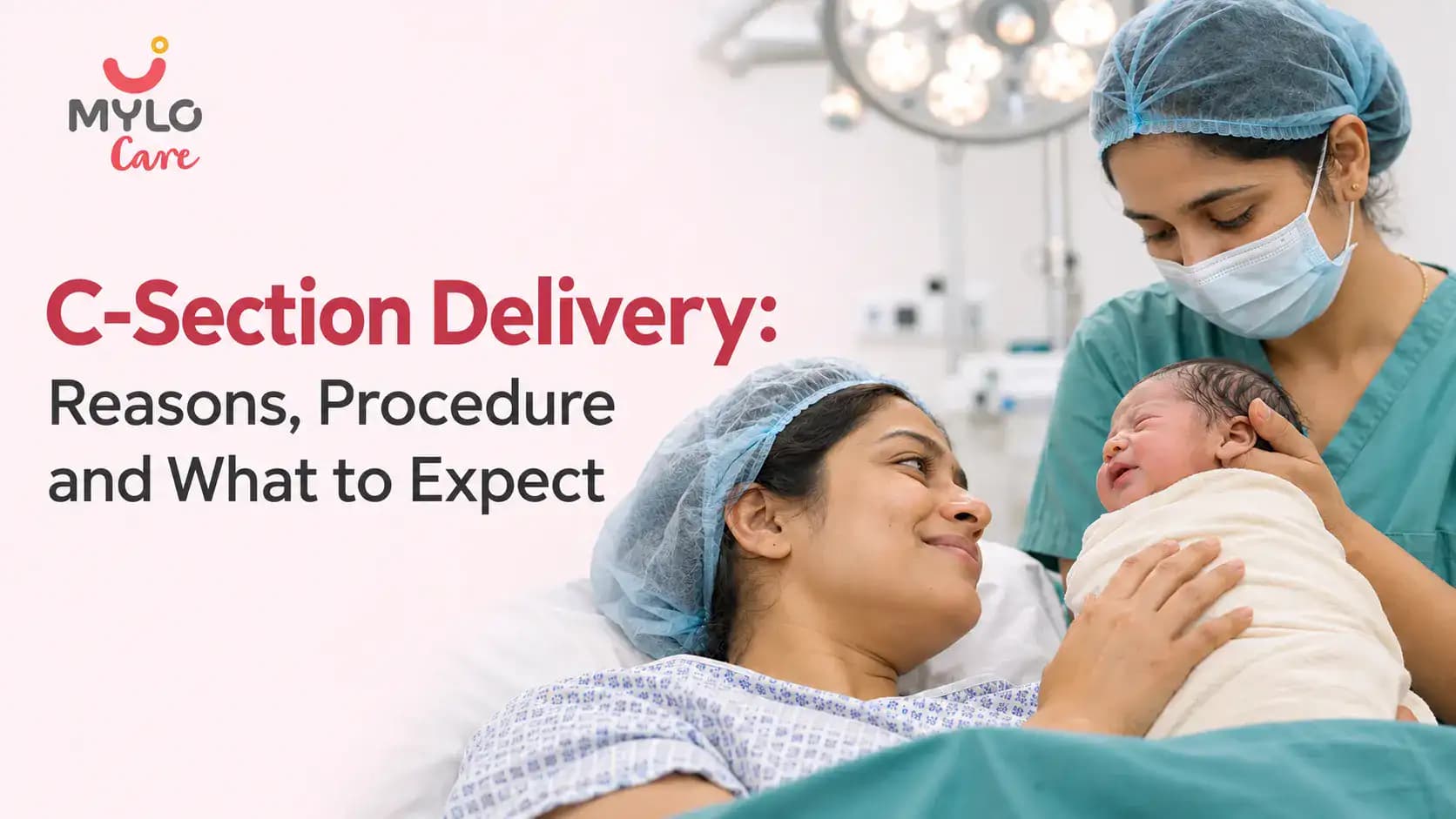
If your doctor has mentioned a C-section, or you simply want to be ready in case labour takes a different turn, it is natural to feel a mix of worry and relief. A caesarean is major surgery, but it is also one of the most common and well-practised operations in the world, and it is often the safest way for a baby to be born. Knowing what will happen, step by step, can take a lot of the fear away.
Quick Answer
A C-section delivery is surgery to deliver your baby through a cut in your lower tummy and womb. It is planned, usually from 39 weeks, for reasons like a breech baby, or done in an emergency during labour. You stay awake but numb from the waist down, surgery takes about 40 to 50 minutes, and recovery takes around 6 weeks.
What Is a C-Section Delivery?
A C-section (caesarean section) is an operation to deliver your baby through cuts made in your abdomen and uterus, instead of through the vagina. Doctors may plan it in advance (an elective or planned C-section) or decide on it during labour (an emergency or unplanned C-section).
C-sections are common. According to NFHS-5 data reported by Down To Earth, 21.5% of births in India were by C-section in 2019 to 2021, up from 17.2% five years earlier. The rate was 14.3% in government hospitals and 47.4% in private hospitals. Worldwide, the World Health Organization reports that about 1 in 5 births (21%) is a caesarean.
A C-section can save lives when it is needed. WHO also cautions that surgery that is not medically needed can be harmful for both mother and baby, so the decision should be based on your health and your baby’s, with clear information about the benefits and risks.
Why Is a C-Section Done?
A C-section is done when a vaginal birth would be riskier for you or your baby than surgery. The reasons fall into two groups.
Reasons for a planned C-section
Your doctor may recommend a planned C-section if:
Your baby is breech (bottom or feet first) and could not be turned.
You have placenta previa, where the placenta lies low and covers the cervix.
You have had a previous C-section, and you and your doctor decide a repeat C-section is safest.
You are carrying twins or more, depending on how the babies are lying. Many twins can still be born vaginally.
Your baby’s head is too large for your pelvis (cephalopelvic disproportion).
You have certain health conditions, such as some heart conditions, pre-eclampsia, or infections that could pass to the baby during birth, like a first episode of genital herpes late in pregnancy or untreated HIV.
Reasons for an emergency C-section
Sometimes the need for a C-section becomes clear only during labour, for example when:
labour is not progressing even with strong contractions
your baby shows signs of distress, such as changes in heart rate, which can mean they are not getting enough oxygen
the umbilical cord slips down ahead of the baby (cord prolapse)
the placenta separates from the womb wall before birth (placental abruption)
there is heavy vaginal bleeding
An emergency C-section does not mean anything you did was wrong. Labour is unpredictable, and the decision is made to keep you and your baby safe.
Can I ask for a C-section without a medical reason?
Yes, you can raise it with your doctor. The NHS advises that your care team should talk you through the benefits and risks compared with a vaginal birth, and offer support if fear of birth is behind your request. If you are worried about labour pain, ask about pain relief options such as an epidural first. To compare both routes in detail, read our guide on which is better, normal or cesarean delivery.
How to Prepare for a Planned C-Section
A little planning makes the day calmer. In the weeks before your C-section:
Talk through the plan with your obstetrician and anaesthetist: the date, the type of anaesthesia, and who can be with you in the operating theatre.
Ask about fasting instructions. Your hospital will tell you when to stop eating and drinking before surgery. Follow their timings exactly.
Share your medical history, including any medicines, allergies, and previous surgeries or reactions to anaesthesia.
Pack your hospital bag with loose, high-waisted cotton clothes and underwear that will not rub on the wound, maternity pads, and front-opening tops for breastfeeding.
Arrange help at home for the first few weeks, since you will not be able to lift heavy things or drive for a while.
Check your health insurance for maternity cover, waiting periods and what it pays for a C-section, so there are no surprises at discharge.
Choosing a date: Some families in India prefer an auspicious date or muhurat for the birth. If you are discussing timing, ask your doctor about the safest week. The NHS notes that planned C-sections are usually done from 39 weeks, because babies born earlier are more likely to have breathing difficulties.
What Happens During a C-Section?
Most C-sections follow the same steps, and the whole operation usually takes about 40 to 50 minutes, according to the NHS. In an emergency, the baby can be delivered much faster.
1. Anaesthesia
Most C-sections are done under a spinal or epidural anaesthetic, which numbs you from the waist down while you stay awake. You will feel no pain, though you may feel pressure, pulling or tugging. A general anaesthetic, where you are fully asleep, is used occasionally, usually when the baby must be delivered very quickly.
2. Getting ready
A drip (IV line) is placed in your arm, and a thin tube (catheter) is put into your bladder to drain urine. Your tummy is cleaned with antiseptic, and a screen is placed across your chest so the area stays sterile. Your birth partner may be allowed to sit near your head, depending on the hospital’s rules.
3. The incision
The doctor makes a cut about 10 to 20 cm long across your lower tummy, usually just above the pubic hairline, and then a cut in the womb. The most common type is a low transverse (bikini) cut across the lower part of the womb. A vertical cut is needed less often, for example in some emergencies or when the baby is in an unusual position.
4. Your baby is born
Your baby is usually born within the first few minutes. The cord is cut, and the team checks your baby. If your baby is well, you can see and hold them soon after. The American Academy of Pediatrics’ HealthyChildren.org recommends immediate skin-to-skin contact when the baby is healthy and stable, because it supports bonding and makes breastfeeding easier. Ask your doctor in advance if this is possible at your hospital.
5. Closing the wound
Delivering the baby is quick, but closing up takes longer. The placenta is removed, the womb is stitched with dissolvable stitches, and the skin is closed with stitches or staples. This part takes most of the operation time.
What Are the Risks of a C-Section?
C-sections are generally very safe, but like any major surgery, they carry some risks. Knowing them helps you spot problems early.
Who | Possible risks |
|---|---|
You | Wound infection, infection of the womb lining (fever, tummy pain, abnormal discharge), heavy bleeding, blood clots in the legs or lungs, and rarely, injury to the bladder or nearby organs |
Your baby | A minor nick to the skin during surgery, which usually heals well, and temporary breathing difficulties, which are more likely if born before 39 weeks and usually improve within a few days |
Future pregnancies | A small chance of the womb scar opening during a later labour, and problems with how the placenta attaches. These risks rise with each C-section |
The NHS describes wound and womb infections as common, heavy bleeding as uncommon, and blood clots and bladder injury as rare. Your doctor takes steps to lower these risks, such as giving antibiotics and encouraging you to walk soon after surgery.
Recovery After a C-Section: What to Expect
Recovery after a C-section takes longer than after a vaginal birth, so be patient and gentle with yourself. Most women feel close to normal around 6 weeks.
Time after surgery | What to expect |
|---|---|
First 24 hours | The catheter usually stays in for at least 12 hours and the dressing for at least 24 hours. You will be helped to sit up, walk a few steps and breastfeed. |
Days 1 to 4 | Most women go home within 1 to 4 days, depending on the hospital and how you are healing. Tummy pain, gas and tiredness are common. |
Week 1 to 2 | Non-dissolvable stitches or staples are usually removed after 5 to 7 days. Clean and dry the wound gently every day and wear loose cotton clothes. |
Weeks 2 to 6 | Walk a little more each day. Do not lift anything heavier than your baby. Avoid driving until you can turn and brake comfortably without pain. |
Around 6 weeks | Your postnatal check. Many women can return to exercise, driving and sex around this time, once the doctor says it is fine. |
A few tips that help:
Keep moving gently. Short walks lower the risk of blood clots and help with gas and constipation.
Take the pain relief your doctor prescribes. Tell them you are breastfeeding so they choose medicines that are safe for your baby.
Support your wound with a pillow when you cough, laugh or feed your baby.
Use sanitary pads, not tampons, for postnatal bleeding.
Accept help with cooking, cleaning and night feeds.
For a detailed day-by-day guide, read C-section recovery: healing from a C-section. If feeding feels hard because of the wound, our guide on how to latch your baby after a C-section shows positions that keep pressure off your tummy.
Your Feelings After a C-Section Matter Too
Many mothers feel happy and relieved after a C-section. Others, especially after an emergency, feel disappointed, shocked or as if they “missed” the birth they hoped for. All of these feelings are valid. A C-section is a real birth, and you did not fail at anything.
Talk to your partner, family or doctor about how you feel. If low mood, anxiety or flashbacks do not ease, or you have thoughts of harming yourself, tell your doctor straight away. Postnatal depression is common and treatable.
When to See a Doctor
After you go home, contact your doctor promptly if you notice:
severe pain, or pain that is getting worse instead of better
a wound that becomes more red, painful or swollen
pus, leaking fluid or a foul smell from the wound, or the wound starting to open
fever, chills or flu-like symptoms
heavy vaginal bleeding or smelly vaginal discharge
pain or burning when passing urine, or leaking urine
Go to hospital immediately if you have:
swelling, pain or redness in one leg, especially the calf
sudden shortness of breath or a new cough
very heavy vaginal bleeding
These can be signs of infection, a blood clot or heavy bleeding, which need urgent treatment.
Myths vs Facts About C-Sections
Myth | Fact |
|---|---|
“After one C-section, every baby must be born by C-section.” | Most women can try for a vaginal birth after caesarean (VBAC). Your doctor will advise based on your scar and pregnancy. |
“A C-section is the easy way out.” | It is major surgery with a longer recovery. It is chosen when it is the safer option, not the easier one. |
“You cannot breastfeed after a C-section.” | You can. Early skin-to-skin contact and comfortable positions help milk flow. |
“A C-section baby is not born naturally, so the bond is weaker.” | How your baby is born does not decide your bond. Holding, feeding and caring for your baby build it. |
“Walking after a C-section will open the stitches.” | Gentle walking is encouraged. It lowers the risk of blood clots and helps you heal. |
Frequently Asked Questions
How long does a C-section take?
The whole operation usually takes about 40 to 50 minutes. Your baby is born within the first few minutes, and the rest of the time is spent closing the womb and skin. An emergency C-section can be faster.
Is a C-section painful?
You should feel no pain during the operation because of the spinal or epidural anaesthetic, though you may feel pressure or tugging. Afterwards, tummy pain and soreness are normal for a few days to weeks, and your doctor will give you pain relief.
How many C-sections can a woman safely have?
There is no fixed number. Risks such as placenta problems and scar tissue rise with each C-section, so your doctor will look at your health history and how your previous surgeries went before advising you.
Can I have a normal delivery after a C-section?
Many women can. A vaginal birth after caesarean (VBAC) is often possible if you had a low transverse cut and your pregnancy has no other complications. Read our VBAC guide and discuss it with your doctor early in pregnancy.
How long will I stay in hospital after a C-section?
Most women go home within 1 to 4 days, depending on the hospital and how quickly you recover. You will stay longer if there were complications or your baby needs extra care.
When can I walk after a C-section?
Your care team will help you sit up and take your first few steps once the anaesthesia wears off. Gentle movement, such as short daily walks, lowers the risk of blood clots. Ask for help getting out of bed for the first few days.
Can I breastfeed right after a C-section?
Yes, if you and your baby are well. You can usually start once you are able to hold your baby, often in the recovery room. Skin-to-skin contact soon after birth makes it easier.
Will my C-section scar be visible?
The scar is usually a low horizontal line just above the pubic hairline. It is noticeable at first, then fades over time and is often hidden by pubic hair.
Medical disclaimer: This article is for general information and does not replace medical advice. Always talk to your obstetrician about the safest way to deliver your baby and any concerns during recovery.
References
Caesarean section. NHS. NHS
Caesarean section: recovery. NHS. NHS
Caesarean section: risks. NHS. NHS
Cesarean birth (C-section). Cleveland Clinic. Cleveland Clinic
Cesarean section (C-section): what to expect. HealthyChildren.org, American Academy of Pediatrics, December 2025. HealthyChildren.org
Caesarean section rates continue to rise, amid growing inequalities in access. World Health Organization, June 2021. WHO
Cesarean births on the rise in India but Mizoram, Nagaland defy trend: NFHS-5. Down To Earth. Down To Earth
Article Posted Under
Related Articles



Related Topics

Medical Disclaimer
This content is for informational purposes only and should not replace professional medical advice. Consult with a physician or other health care professional if you have any concerns or questions about your health. If you rely on the information provided here, you do so solely at your own risk.


AWARDS AND RECOGNITION

Mylo wins Forbes D2C Disruptor award

Mylo wins The Economic Times Promising Brands 2022
AS SEEN IN













- Mylo Care: Effective and science-backed personal care and wellness solutions for a joyful you.
- Mylo Baby: Science-backed, gentle and effective personal care & hygiene range for your little one.
- Mylo Community: Trusted and empathetic community of 10mn+ parents and experts.


Product Categories
Baby Carrier | Baby Soap | Stretch Marks Cream | Baby Cream | Baby Shampoo | Baby Massage Oil | Baby Hair Oil | Stretch Marks Oil | Baby Body Wash | Baby Powder | Baby Lotion | Diaper Rash Cream | Teether | Baby Kajal |