


Orders

Profile

Frequently asked questions about milk production
 44 Likes|
 5 min
5 minDoes milk production change with the progression of lactation?
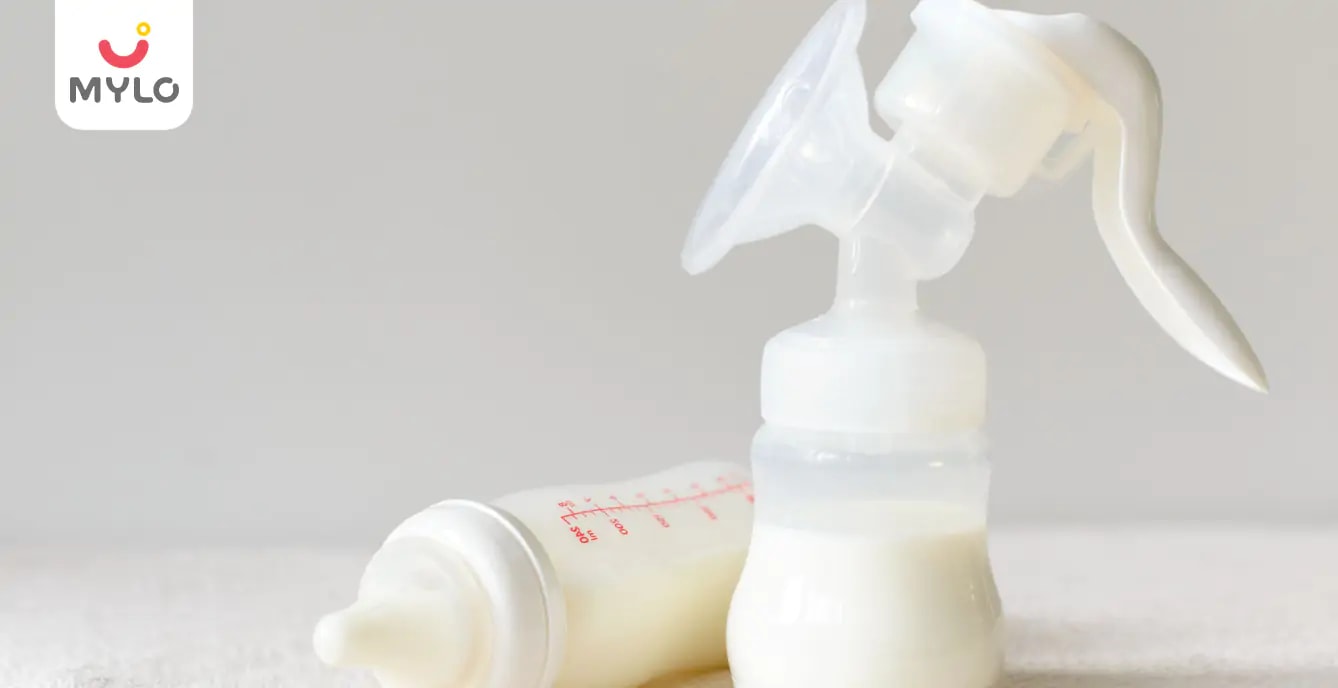
For the initial few days till the day when milk “comes in”, milk production does not depend upon the frequency or quantity of milk ejected from the breast. Following that, it is essential to have regular milk removal from the breast (via baby or pump) for smooth milk production. The breast might feel heavier, can have lumps or completely stop the milk production within several days if milk is not regularly and efficiently removed. You can check the Manual breast pump with Mylo.
If nursing is going well, early weeks of lactation can produce more milk than baby needs. Experiencing leaking, breast fullness/engorgement during first few weeks is normal amongst many moms. Calm down! The same does not happen throughout the breastfeeding journey. You need not worry, as the body takes its time to adjust to the amount of milk that the baby actually needs. You soon will have a blissful breastfeeding experience.
The milk intake rapidly rises in the first few weeks of life in exclusively breastfed babies, then gradually come to static between one and six months of age. Studies to date do not suggest that the baby’s breastmilk intake changes with his/her weight or age between one and six months. Though intake might see a decline between six months and a year, still it is the major source of nutrition for a baby.
Also note Mumma, that after 1.5 months to somewhere around 3 months (or maybe sometimes later for a few moms), the milk-stimulating hormone – prolactin reduces from high baseline to lower baseline level, which is normal for later lactation. At this stage, mom’s breasts are less fuller, and experience reduced leakage, the let-down (or the flow) may become less noticeable and if you are pumping it out, then the output may decrease. These changes are not a sign of reduced lactation. These normal hormonal changes appear at this stage.
What are foremilk and hindmilk and how does this work?
As the feeding stage progresses, the amount of fat in the milk obtainable by the baby gradually changes. This change occurs due to the mechanism of milk release. The breast produces only one type of milk, high in fat content. The terms foremilk and hindmilk are defined as per the stage of feeding. Foremilk is the term used for the milk that is available at the beginning of a feeding, which is relatively low in fat content. Hindmilk is the term for the milk at the end of a feeding, which has higher fat content in that particular feed. This change is very gradual without marking any sharp distinction. Research from Peter Hartmann’s group indicates that the fat content of the milk is mainly determined by the emptiness of the breast — the less milk in the breast, the higher the fat content.
What is the process that occurs between consecutive feedings?
For a lactating mother, the production of milk is an ongoing process. In- between two consecutive feeds, milk gets collected in the mom’s breasts. If the time gap between feeds is more, then a larger volume of milk gets stored in the breast. The milk storage capacity can vary significantly from mom to mom and is not dependent on the breast size, which otherwise can limit the storage capacity. Whatever the storage capacity, mothers of both types produce enough milk for their babies. Mothers with higher storage capacity, indeed, can go longer between feedings without affecting milk supply and the baby’s growth.
Do we need to give time to breasts to re-fill?
Milk production is a continuous process. Therefore, logically breasts are never completely empty. More milk will keep flowing as the milk is being ejected. In each feed cycle, a baby never suckles all the milk. The quantity that the baby drinks depends upon his appetite which may increase or decrease as per age, weight or health of the baby. On average, 75- 80% of the milk is removed from the breasts out of the total milk produced.
Studies suggest that the emptier the breast, the faster it makes milk. So when has suckled a large quantity of milk from the breast, the process of milk production also speeds up. In a way, the more the baby sucks, the merrier the breasts.
In a nutshell, a mom need not wait for her breasts to get re-filled in order to quench her baby’s needs. For consistent milk production, always time the nursing in shorter intervals. The longer you give a gap, the more milk is accumulated delaying further production.
References:
1.
[Yesterday 00:44] Deepali Sood
References:
1. Golan Y, Assaraf YG. (2020). Genetic and Physiological Factors Affecting Human Milk Production and Composition. NCBI
2. SAGE Journals. Journal of Human Lactation. journals.sagepub.com
 Yes
Yes
 No
No
Your parenting partner
in your pocket.
supportive community.

Your parenting partner
in your pocket.
supportive community.


Article Posted Under
Helpful Tools & Calculators

.webp&w=32&q=75)















Official account of Mylo Editor
Related Articles


Related Videos

tips to increase your breast milk supply | easy + naturally

How To Increase Breastmilk Supply?

13 Simple Ways to Naturally Boost / Increase Your Milk Supply: How to
How to increase breast milk Supply after delivery in Hindi

How do I know if my baby is getting sufficient milk? - Dr. Jyothi Raghuram
Questions about this article
- Asked by Mother of 4 Months Old Baby
The stored milk in the breast between long gap of feeding can be given to the baby
- Asked when Mother of 4 Months Old Baby
How to increase breast milk ?
- Asked when Mother of 4 Months Old Baby
Hiii...
Related Topics
.webp&w=32&q=75)
Recently Published Articles
Your body needs extra nutrition this trimester - these can help.

Is Maternity Leave 6 Or 9 Months?

Top 5 Most Common Skin Care Myths Busted

How Can You Easily Determine Using Seven Easy Homemade Remedies to Check if You’re Pregnant or Not?

Best Crime Series On Amazon Prime

Everything You Need to Know About Linea Nigra, the Line Around Your Belly
Medical Disclaimer
This content is for informational purposes only and should not replace professional medical advice. Consult with a physician or other health care professional if you have any concerns or questions about your health. If you rely on the information provided here, you do so solely at your own risk.


AWARDS AND RECOGNITION

Mylo wins Forbes D2C Disruptor award

Mylo wins The Economic Times Promising Brands 2022
AS SEEN IN












- Mylo Care: Effective and science-backed personal care and wellness solutions for a joyful you.
- Mylo Baby: Science-backed, gentle and effective personal care & hygiene range for your little one.
- Mylo Community: Trusted and empathetic community of 10mn+ parents and experts.


Product Categories
Baby Carrier | Baby Soap | Baby Wipes | Stretch Marks Cream | Baby Cream | Baby Shampoo | Baby Massage Oil | Baby Hair Oil | Stretch Marks Oil | Baby Body Wash | Baby Powder | Baby Lotion | Diaper Rash Cream | Newborn Diapers | Teether | Baby Kajal | Baby Diapers Pants | Cloth Diapers | Laundry Detergent | Lactation Granules |