


Orders

Profile


Wallet

Birthmarks in Babies: Types, Causes, Risks and Treatment
 9 Likes|
 14 min

Key Takeaways
Quick overview in 30 seconds
- Birthmarks are coloured marks on a baby's skin present at birth or appearing soon after, ranging from brown, black, pink, red, purple to pale blue shades.
- There are two main types: vascular birthmarks like macular stains, hemangiomas and port-wine stains, and pigmented birthmarks like café-au-lait spots, Mongolian spots and moles.
- Most birthmarks are harmless and fade on their own, but some may bleed, itch, get infected or change in size and colour, requiring medical attention.
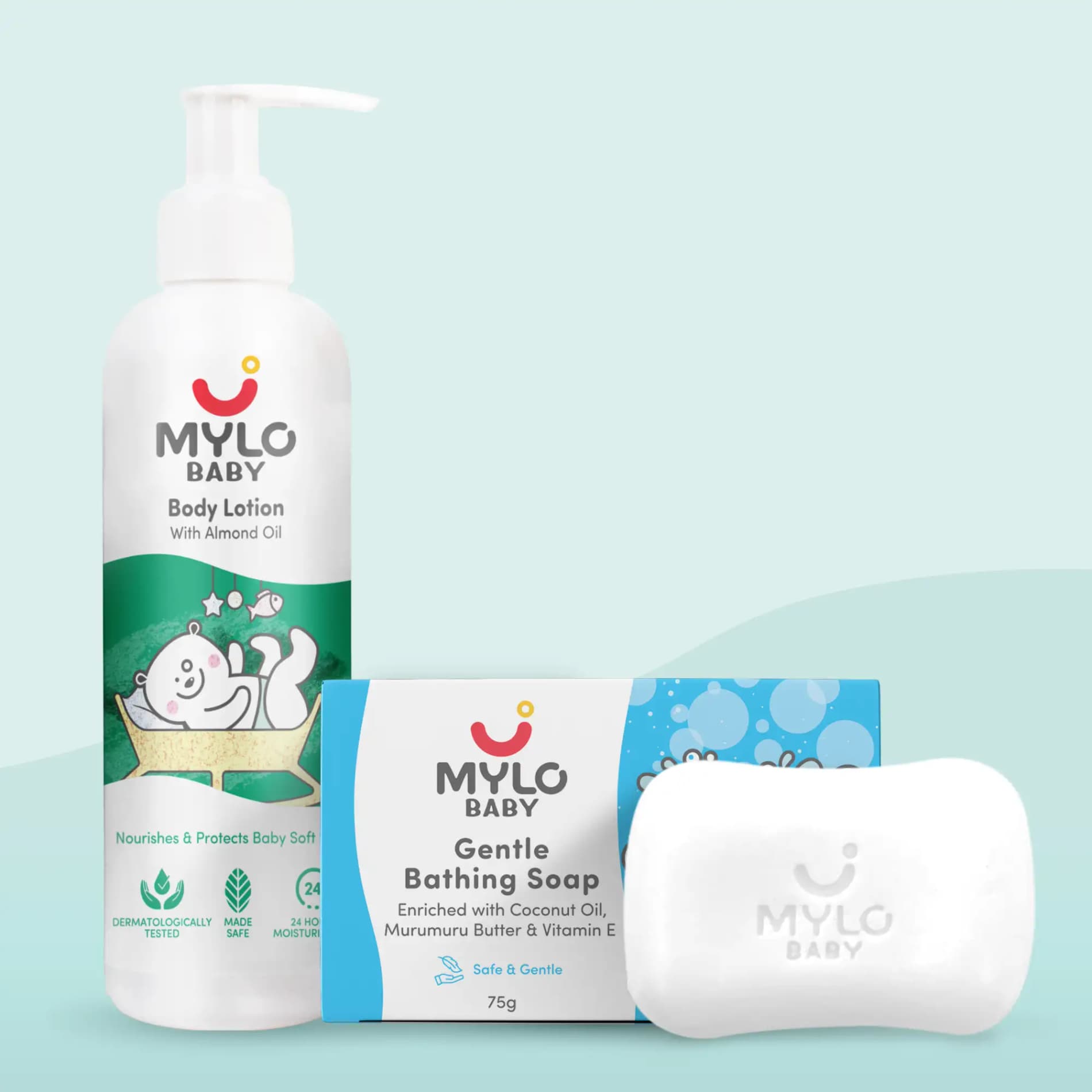
- How do you care for your baby's delicate skin daily? Explore our Baby Wellness Kit | Skincare Gift Set for Newborns.

 4.2
 4.5
 4.7
 4.1
Quick Answer
Birthmarks are coloured marks on a baby’s skin that are present at birth or appear in the first few weeks. Most birthmarks are harmless, and many fade on their own. A few, such as fast-growing strawberry marks near the eyes or mouth, large moles or many café-au-lait spots, need a doctor’s check. Birthmarks are not caused by anything you did during pregnancy.
You may have spotted a pink patch on the back of your baby’s neck while bathing them, or a bluish mark on their lower back that looks like a bruise. It is natural to wonder whether it is normal, whether it will stay and whether it means anything. This guide helps you identify the common types, know which ones fade, and recognise the few signs that mean you should show it to your paediatrician.
What is a birthmark?
A birthmark is a mark on the skin that is present at birth or shows up soon after. Birthmarks can be pink, red, purple, blue-grey, brown or black, flat or raised, small or large.
They fall into two main groups:
Vascular birthmarks: made of extra or wider blood vessels in the skin. They are usually pink, red or purple.
Pigmented birthmarks: made of extra pigment (colour) cells in the skin. They are usually brown, black or blue-grey.
According to the NHS, most birthmarks are harmless and many fade without treatment, although some need treatment.
What are the common types of birthmarks?
The table below helps you match what you see on your baby’s skin with the likely type, and tells you what usually happens next.
Birthmark | What it looks like | How common | Does it fade? |
|---|---|---|---|
Salmon patch (stork bite, angel kiss) | Flat pink or red patch on the eyelids, forehead, between the eyebrows or back of the neck. Darker when baby cries. | Very common, up to 80% of babies | Usually fades by the toddler years. Marks on the back of the neck can last longer. |
Strawberry mark (infantile haemangioma) | Raised bright red lump, or bluish if deeper under the skin. Appears in the first few weeks. | Up to 5% of babies | Grows for some months, then slowly shrinks, usually from about age 1 |
Port wine stain | Flat pink, red or purple mark, often on the face or neck, usually one side | About 3 in 1,000 children | No. It grows with the child and may darken or thicken |
Blue-grey spot (dermal melanocytosis, once called Mongolian spot) | Flat blue-grey patch on the lower back or bottom. Often mistaken for a bruise. | Very common in babies with brown or darker skin, including babies of Asian and Indian descent | Usually fades by about age 4 |
Café-au-lait spot | Flat, light brown “coffee with milk” patch | 20 to 30% of people | Usually stays. May darken in the sun |
Congenital mole (congenital melanocytic naevus) | Brown or black mole, sometimes raised or hairy | 1 to 3% of newborns | No. It grows slowly with the child |
Sources: AAP, HealthyChildren.org; NHS
Salmon patches (stork bites)
These are the most common birthmarks of all. They are made of tiny blood vessels close to the skin and may look brighter when your baby is crying, warm or active. Most fade during the first couple of years, though a faint mark can remain, especially on the back of the neck, as the MSD Manual notes. They need no treatment.
Strawberry marks (infantile haemangiomas)
These raised red marks are not usually visible at birth and appear in the first few weeks. They grow fastest between about 1 and 3 months of age, and most stop growing by about 5 months, according to the American Academy of Pediatrics guideline. After that, they slowly shrink and fade over several years. The NHS says they are more common in girls, premature babies, low birth weight babies and twins.
Most need no treatment. But some need early attention, so show any new strawberry mark to your paediatrician, ideally by the time your baby is 1 month old, since treatments work best when started early. The warning signs are listed below.
Port wine stains
Port wine stains are present from birth and do not fade. Over time they can become darker and thicker. Laser treatment can lighten them, and the NHS says it works best when started young. Rarely, a port wine stain on the forehead or eyelid is linked to a condition called Sturge-Weber syndrome, so your doctor may suggest tests. Read more in our guide to port wine stain birthmarks.
Blue-grey spots (once called Mongolian spots)
These flat blue-grey patches are very common in Indian babies and are completely harmless. They are often mistaken for bruises. Because of this, the NHS advises having them noted in your baby’s health records. They usually fade by about age 4 and need no treatment.
Café-au-lait spots
One or two light brown café-au-lait spots are common and harmless. However, six or more spots, or spots in the armpits or groin, can be a sign of a genetic condition called neurofibromatosis type 1, so your doctor will want to check, according to the NHS and AAP.
Congenital moles
Moles present at birth grow slowly with your child and can become darker, raised or hairy, especially around puberty. Most small moles are harmless and only need watching. Large and giant moles carry a higher risk of skin cancer (melanoma), so they need regular check-ups, and sun protection matters for any child with them.
What does a birthmark on the neck mean?
A pink or red patch on the back of a baby’s neck is almost always a salmon patch, also called a stork bite. It is harmless and very common. Those on the back of the neck can take longer to fade than those on the face, and a faint mark may stay into adulthood, as the NHS and MSD Manual explain.
Other marks that can appear on the neck or throat:
Strawberry mark (haemangioma): a raised red lump. The AAP guideline notes that haemangiomas in the neck area have a higher risk of forming open sores, and those in the “beard area” of the lower face and neck can rarely be linked to airway problems. Show these to a doctor early.
Port wine stain: a flat, darker red or purple patch that does not fade.
Café-au-lait spot or mole: flat brown patch or a darker spot.
In many families, a birthmark is believed to carry a special meaning or bring luck. These beliefs are part of culture and are harmless to enjoy. Medically, though, a birthmark on the neck simply tells you which type of mark it is, not anything about your child’s future or personality.
What causes birthmarks?
Doctors do not know exactly what causes most birthmarks. KidsHealth explains that they cannot be prevented, are not caused by anything done or not done during pregnancy, and most are not related to injury during childbirth. Some types may run in families.
This means a birthmark is not caused by what the mother ate, by a craving that was not fulfilled, or by going out during a solar or lunar eclipse (grahan), as some families believe. There is nothing you could have done to prevent it.
When should I worry about my baby’s birthmark?
Most birthmarks are harmless, but see your paediatrician if a birthmark:
Is a raised red or blue lump near the eye, nose, lips or ear, as it may affect vision, feeding or appearance
Is a strawberry mark in the beard area, neck, armpit or nappy area, or is larger than a few centimetres
Is growing very quickly in the first few months
Bleeds, forms an open sore, or looks infected
Is painful or seems to bother your baby
Is one of five or more strawberry marks on the body
Is a port wine stain on the forehead or eyelid
Is one of six or more café-au-lait spots, or there are café-au-lait spots in the armpits or groin
Is a large mole, or any mole that changes shape, colour or size, itches or bleeds
Is a large mark over the lower back or spine
Sources: AAP guideline summary; NHS; AAP, HealthyChildren.org
Timing matters for strawberry marks. The AAP advises that babies with a potentially high-risk haemangioma are seen early, ideally by 1 month of age, because treatment works best before the fastest growth phase. Taking a photo of the mark every week can help your doctor see how quickly it is changing.
How are birthmarks treated?
Most birthmarks need no treatment. When treatment is needed, it depends on the type, size and location of the mark, and on whether it affects your child’s health.
Birthmark | Treatment options |
|---|---|
Salmon patch | None needed |
Blue-grey spot | None needed |
Strawberry mark (haemangioma) | Most need none. Problem haemangiomas are treated with medicine, usually an oral beta-blocker (propranolol) prescribed and monitored by a specialist. Gels, steroid injections, laser or surgery are used in some cases. |
Port wine stain | Pulsed-dye laser over several sessions to lighten it, ideally started young. Special skin camouflage makeup can cover it in older children. |
Café-au-lait spot | Usually none. Laser can lighten them, but they often come back. |
Congenital mole | Usually just monitoring. Surgery may be considered for some larger moles. |
Sources: AAP guideline summary; KidsHealth; NHS
The NHS notes that laser therapy works best when started between 6 months and 1 year of age, and that surgery can remove a birthmark but may leave a scar. Your paediatrician may refer you to a paediatric dermatologist (a doctor who specialises in children’s skin).
How do I care for my baby’s skin if they have a birthmark?
Most birthmarks need no special care. Treat the skin as you would the rest of your baby’s skin.
Wash gently with plain water or a mild baby cleanser and pat dry. Our daily skin care routine for babies covers the basics.
Do not rub, scrub or apply lemon, haldi, bleaching creams or home remedies to try to fade a birthmark. These can irritate a baby’s delicate skin.
If a strawberry mark gets an open sore, keep it clean and dry and show it to your doctor.
Protect moles and café-au-lait spots from strong sun with clothing and shade.
Take a monthly photo with a coin or ruler next to the mark so you can spot changes.
Frequently asked questions
When to worry about birthmarks?
Worry, and see your paediatrician, if a birthmark is near the eyes, nose, lips or ears, grows quickly, bleeds or forms a sore, is painful, or is very large. Also get a check for five or more strawberry marks, six or more café-au-lait spots, a port wine stain on the forehead or eyelid, or any mole that changes. For strawberry marks, an early visit, ideally by 1 month of age, is best.
Do C-section babies have birthmarks?
Yes. Babies born by C-section get birthmarks just as often as babies born vaginally, because most birthmarks are not related to childbirth. What can differ is temporary bruising: babies born vaginally, especially with forceps or vacuum, may have marks on the face or scalp from pressure during birth. These are bruises, not birthmarks, and they usually fade within a few days.
Which is the rarest birthmark?
There is no single official “rarest” birthmark, but some types are very rare. Giant congenital moles occur in about 0.005% of newborns, or roughly 1 in 20,000. Venous malformations affect about 2 in 10,000 children, and congenital haemangiomas, which are fully formed at birth, are much rarer than the common strawberry mark.
How to remove birthmark?
Most birthmarks do not need removing, and many fade on their own. When removal or lightening is needed, a dermatologist may use laser therapy (especially for port wine stains), medicine for problem strawberry marks, or surgery for some moles, which may leave a scar. Do not try to remove a birthmark at home with creams, lemon, bleach or other remedies, as these can harm your baby’s skin.
Do birthmarks go away?
Many do. Salmon patches usually fade by the toddler years, blue-grey spots usually fade by about age 4, and strawberry marks shrink slowly over several years. Port wine stains, café-au-lait spots and congenital moles usually stay for life.
Can a birthmark appear after birth?
Yes. Strawberry marks usually appear in the first few weeks after birth rather than on day one. Some congenital moles appear during the first year, and café-au-lait spots can appear very early in life, according to the AAP.
Are birthmarks hereditary?
Some kinds of birthmarks may run in families, but for most there is no known genetic cause.
Can a birthmark turn into cancer?
Very rarely. Most birthmarks never become cancerous. Large and giant congenital moles carry a higher risk of melanoma (a type of skin cancer), so they need regular check-ups and sun protection. See a doctor if any mole changes in size, shape or colour, itches or bleeds.
References
NHS. Birthmarks.
American Academy of Pediatrics, HealthyChildren.org. Your newborn’s skin: birthmarks and rashes.
American Family Physician. Infantile hemangioma: AAP releases guideline for management. 2019.
MSD Manual Consumer Version. Common birthmarks and minor skin markings in newborns.
Nemours KidsHealth. Birthmarks.
Cyberderm (DOIT Association). Congenital melanocytic nevus.
Disclaimer: This article is for general information and does not replace advice from your paediatrician or dermatologist. If you are worried about a birthmark, contact your doctor.

Loved by mamas caring for newborn skin
Gentle, baby-safe skincare essentials to nurture your little one's delicate skin every single day with confidence.
Baby Wellness Kit | Skincare Gift Set for Newborns



Baby Lotion (100 ml) + Baby Soap (75 gm)
Made Safe Australia Certified | Dermatologically Tested | Long Lasting 24 Hours Moisturization| Soothes Dryness



Pregnancy Massage Oil + Coconut Oil - 200 ml each


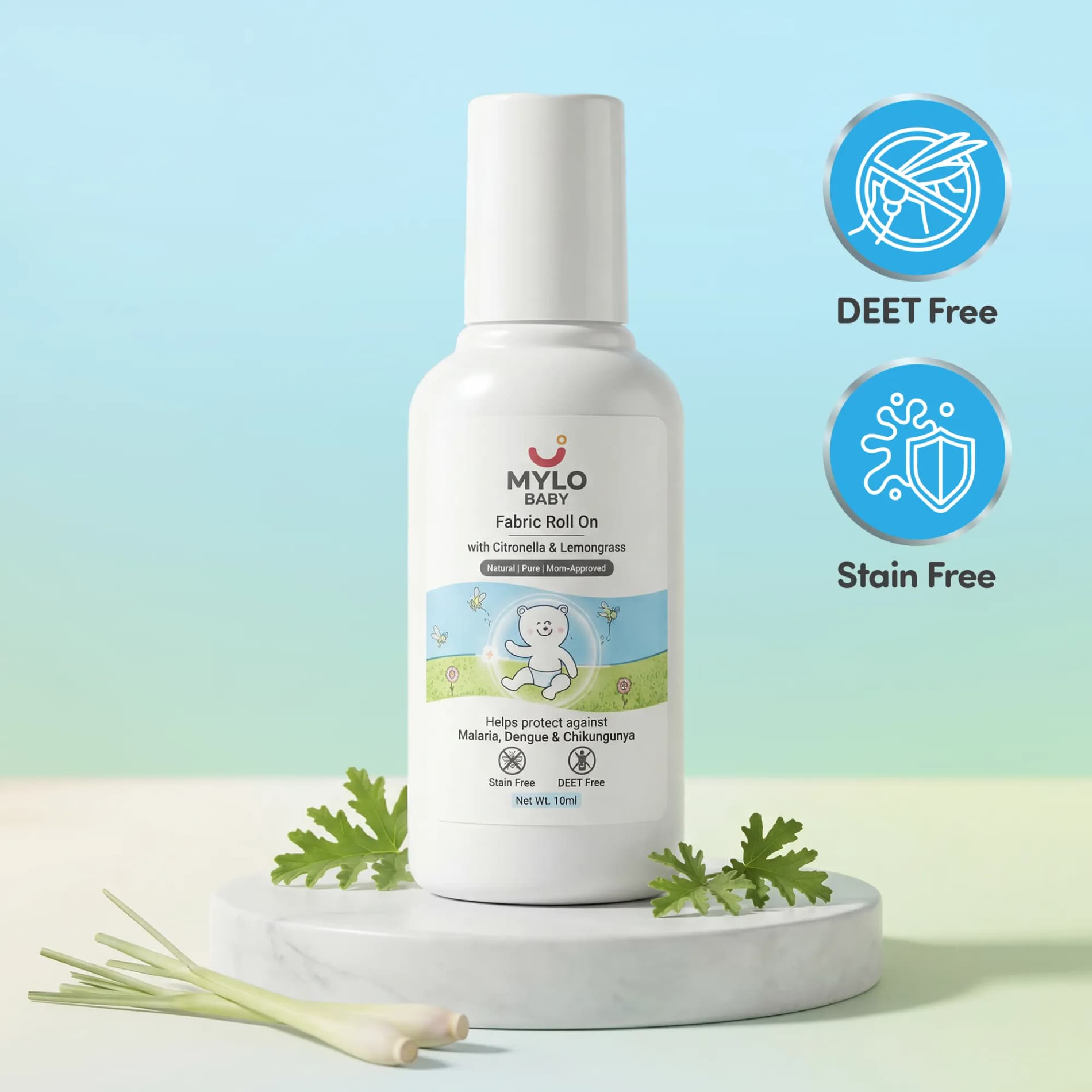
Mylo Baby Mosquito Repellent Fabric Roll-On (10ml)
100% Natural | DEET-Free | Stain-Free | Babies & Kids Safe | Apply on Fabric | Travel-Friendly

Article Posted Under
Related Articles


Related Topics

Medical Disclaimer
This content is for informational purposes only and should not replace professional medical advice. Consult with a physician or other health care professional if you have any concerns or questions about your health. If you rely on the information provided here, you do so solely at your own risk.


AWARDS AND RECOGNITION

Mylo wins Forbes D2C Disruptor award

Mylo wins The Economic Times Promising Brands 2022
AS SEEN IN













- Mylo Care: Effective and science-backed personal care and wellness solutions for a joyful you.
- Mylo Baby: Science-backed, gentle and effective personal care & hygiene range for your little one.
- Mylo Community: Trusted and empathetic community of 10mn+ parents and experts.


Product Categories
Baby Carrier | Baby Soap | Baby Wipes | Stretch Marks Cream | Baby Cream | Baby Shampoo | Baby Massage Oil | Baby Hair Oil | Stretch Marks Oil | Baby Body Wash | Baby Powder | Baby Lotion | Diaper Rash Cream | Newborn Diapers | Teether | Baby Kajal | Baby Diapers Pants | Cloth Diapers | Laundry Detergent | Lactation Granules |