


Orders

Profile

Adenomyosis Vs Endometriosis: How to Spot the Symptoms and Seek Early Intervention
 2 Likes|
 8 min
8 min

C-section & gynae problems · 4 years experience
Have you ever experienced painful periods or chronic pelvic pain? You might be surprised to learn about adenomyosis vs endometriosis and how they could be the underlying causes. While both share similarities, it's essential to understand the difference between endometriosis and adenomyosis and recognize their symptoms.
In this article, we will understand these two conditions in detail, shedding light on their symptoms, diagnosis and treatment options. By increasing your knowledge, you can empower yourself to take control of your reproductive health and seek medical attention.
Understanding endometriosis vs adenomyosis
When it comes to adenomyosis vs endometriosis, they are two distinct yet interconnected conditions that can affect women's reproductive health. While they share similarities, it's crucial to understand their differences to seek proper diagnosis and treatment.
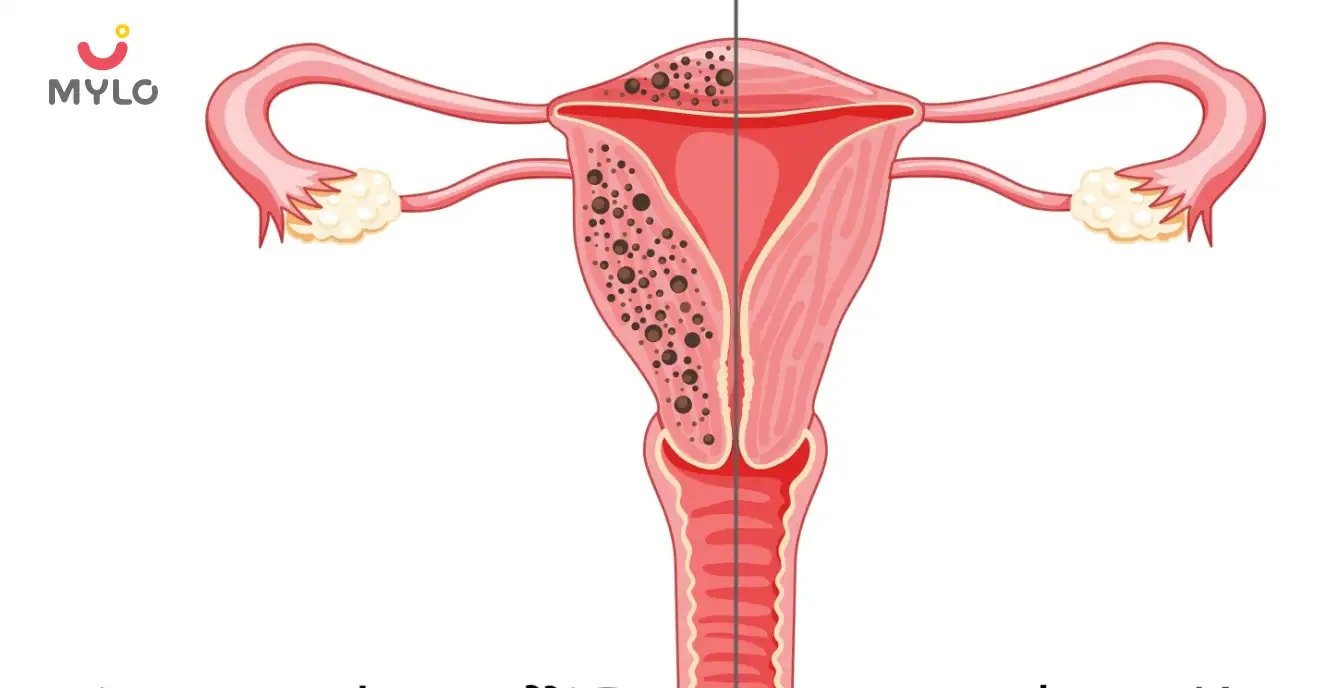
Endometriosis occurs when the tissue that typically lines the uterus, called the endometrium, grows outside the uterus. These growths, known as endometrial implants, can appear on the ovaries, fallopian tubes, outer surfaces of the uterus, or other pelvic organs. During each menstrual cycle, these implants thicken, break down, and bleed, leading to pain, inflammation, and scar tissue formation.
Adenomyosis, on the other hand, occurs when the endometrial tissue infiltrates the muscular wall of the uterus, called the myometrium. This results in an enlarged and thickened uterus. Similar to endometriosis, adenomyosis also causes pain, particularly during menstruation.
Endometriosis and adenomyosis symptoms
Let us now take a look at the symptoms of these two conditions:
Endometriosis symptoms
-
Pelvic pain
-
Painful periods (dysmenorrhea)
-
Pain during intercourse (dyspareunia)
-
Infertility or difficulty getting pregnant
-
Fatigue
-
Digestive issues (such as bloating, diarrhea, or constipation)
-
Heavy or prolonged menstrual bleeding
-
Back pain
-
Painful bowel movements or urination during periods
-
Ovarian cysts
Adenomyosis symptoms
-
Pelvic pain or pressure
-
Heavy or prolonged menstrual bleeding
-
Severe menstrual cramps (dysmenorrhea)
-
Enlarged and tender uterus
-
Bloating or swelling in the lower abdomen
-
Painful intercourse
-
Blood clots during periods
-
Back pain during periods
-
Increased frequency of urination during periods
-
Infertility or difficulty conceiving
Difference between endometriosis and adenomyosis
When it comes to adenomyosis vs endometriosis, there are differences between endometriosis and adenomyosis, but the two conditions can coexist. Endometriosis involves the growth of endometrial tissue outside the uterus, whereas adenomyosis involves the invasion of endometrial tissue into the uterine muscle. Additionally, endometriosis implants can appear in various locations within the pelvic region, while adenomyosis affects explicitly the uterus.
Diagnosis and treatment options for endometriosis and adenomyosis
Diagnosis and treatment options for adenomyosis and endometriosis may include:
Diagnosis
-
Medical History and Symptom Assessment
Your healthcare provider will discuss your symptoms and medical history and perform a physical examination.
-
Imaging Studies
Ultrasound, MRI, or other imaging techniques may be used to visualize the pelvic organs and detect any abnormalities or signs of endometriosis or adenomyosis.
A minimally invasive surgical procedure that allows direct visualization of the pelvic organs. It is considered the gold standard for diagnosing endometriosis. Tissue samples may be taken for biopsy during laparoscopy.
Treatment Options
Pregnancy with adenomyosis and endometriosis is possible if early interventions are taken, and treatment protocol is followed.
-
Pain Medication
Over-the-counter pain relievers like nonsteroidal anti-inflammatory drugs (NSAIDs) can help manage pain associated with endometriosis and adenomyosis.
-
Hormonal Therapy
Birth control pills, hormonal patches, intrauterine devices (IUDs), or other hormonal medications may be prescribed to regulate hormone levels, reduce pain, and control the growth of endometrial tissue.
-
Surgery
Surgery may be recommended in cases where symptoms are severe, or fertility is a concern. This can involve laparoscopic excision or ablation of endometriosis implants, removal of adenomyosis-affected areas, or even hysterectomy (removal of the uterus).
-
Fertility Treatment
If infertility is a concern, assisted reproductive technologies (ART) such as in vitro fertilization (IVF) may be recommended to improve the chances of pregnancy.
-
Pain Management Techniques
Complementary approaches like physical therapy, acupuncture, or nerve-blocking medications can help manage chronic pain associated with endometriosis and adenomyosis.
-
Lifestyle Modifications
Healthy lifestyle choices, including regular exercise, stress management techniques, and a balanced diet, can help alleviate symptoms and improve overall well-being.
The impact of endometriosis vs adenomyosis on fertility
Endometriosis Vs adenomyosis can both have a significant effect on fertility. Here's how these conditions can affect a woman's ability to conceive:
Endometriosis
-
Distorted Pelvic Anatomy
Endometriosis can cause the formation of adhesions, scar tissue, and cysts in the pelvic area.
-
Fallopian Tube Blockage
Endometriosis can lead to the blockage or damage of the fallopian tubes, which are responsible for transporting the egg from the ovaries to the uterus.
-
Hormonal Imbalances
Endometriosis is associated with hormonal imbalances, particularly elevated estrogen levels.
-
Inflammation and Immune Dysfunction
Endometriosis is characterized by chronic inflammation and immune system dysfunction.
Adenomyosis
-
Uterine Dysfunction
Adenomyosis can cause enlargement, thickening, and hardening of the uterine walls, leading to reduced fertility.
Similar to endometriosis, adenomyosis is also associated with hormonal imbalances.
-
Impaired Egg Quality
Adenomyosis can affect the quality of the eggs produced by the ovaries.
While adenomyosis can present challenges to achieving pregnancy, it is still possible to have a successful pregnancy with adenomyosis.
Coping with endometriosis and adenomyosis
Coping with these two conditions can be challenging, both physically and emotionally. Here are some strategies that may help individuals manage these conditions and improve their quality of life:
-
Educate Yourself
Learn as much as you can about adenomyosis vs endometriosis. Understanding the conditions, their symptoms, and treatment options can empower you to make informed decisions and actively participate in your healthcare.
-
Build a Support Network
Seek support from friends, family, or support groups. Connect with others who have similar experiences, as they can provide empathy, advice, and encouragement throughout your journey.
-
Communicate with Healthcare Providers
Maintain open and honest communication with your healthcare providers.
-
Pain Management Techniques
Explore various techniques to alleviate discomfort associated with endometriosis and adenomyosis.
-
Healthy Lifestyle Choices
Adopting a healthy lifestyle can help manage symptoms. Maintain a balanced diet, exercise regularly, practice stress reduction techniques such as yoga or meditation, and get enough restful sleep.
-
Prioritize Self-Care
Take time for self-care activities that promote relaxation and well-being. This may include engaging in hobbies, spending time with loved ones, practicing mindfulness, or pursuing activities that bring joy and fulfillment.
-
Seek Emotional Support
Emotional support is crucial in managing the emotional toll of chronic conditions. Consider therapy, counseling, or support groups to help address emotional challenges and develop coping strategies.
-
Stay Positive
Maintain a positive mindset and focus on the aspects of life that bring you joy and fulfillment. Celebrate small victories and maintain hope for better management of your condition.
Remember, each individual's experience with endometriosis Vs adenomyosis is unique. Finding the most practical combination of treatments and coping strategies that work for you may take time. Be patient, persevere, and reach out for support when needed.
Seeking early intervention for endometriosis and adenomyosis
Seeking early intervention for adenomyosis and endometriosis is crucial for managing symptoms, preventing complications, and improving quality of life. Here are some steps to consider for early intervention:
-
Recognize the Symptoms
Educate yourself about the common symptoms of endometriosis and adenomyosis. By being aware of these symptoms, you can promptly identify potential red flags and seek medical attention.
-
Consult with a Healthcare Professional
If you experience symptoms suggestive of endometriosis or adenomyosis, consult with a healthcare professional, preferably a gynecologist or a specialist in reproductive health.
-
Diagnostic Tests
Depending on the suspected condition, your healthcare provider may recommend diagnostic tests such as transvaginal ultrasound, magnetic resonance imaging (MRI), or laparoscopy.
-
Early Treatment Options
Once diagnosed, your healthcare provider will discuss various treatment options based on the severity of symptoms, your reproductive goals, and overall health.
-
Fertility Preservation
If preserving fertility is a concern, discuss it with your healthcare provider. They can explore options such as fertility preservation techniques, like freezing eggs or embryos, for future use in case you plan to conceive later.
-
Ongoing Monitoring
Regular follow-up appointments with your healthcare provider are important to monitor the progression of the conditions, assess treatment effectiveness, and make any necessary adjustments to your treatment plan.
Conclusion
In conclusion, understanding adenomyosis vs endometriosis is crucial in seeking early intervention and appropriate management. Both conditions can cause significant discomfort and impact a person's quality of life. Individuals can take proactive steps toward managing their condition by recognizing the symptoms, consulting with healthcare professionals, undergoing diagnostic tests, and exploring treatment options. Early intervention not only helps alleviate symptoms but also allows for the preservation of fertility and a better long-term outlook. By staying informed, seeking timely medical attention, and advocating for their health, individuals can take control of their well-being and improve their overall quality of life.
 Yes
Yes
 No
No
Your parenting partner
in your pocket.
supportive community.

Your parenting partner
in your pocket.
supportive community.


Article Posted Under
Dr. Shruti Tanwar is well qualified and competent Obstetrician and Gynecologist with more than 4 years of experience. She is well updated and has worked and gained experience from the most prime institute of Delhi-Safdarjung Hospital. She has innate ability to listen and understand your problem and give detailed personalized advice and evidence-based treatment. She specializes in treatment for high-risk pregnancy, vaginal discharge, endometriosis, fibroids, ovarian cysts etc.
Related Articles
Questions about this article
- Asked when 33 weeks pregnant
Influenza and boostrix injection kisiko laga hai kya 8 month pregnancy me and q lagta hai ye plz reply me
- Asked when 7 weeks pregnant
Hai.... My last period was in feb 24. I tested in 40 th day morning 3:30 .. That is faint line .. I conculed mylo thz app also.... And I asked tha dr wait for 3 to 5 days ... Im also waiting ... Then I test today 4:15 test is sooooo faint ... And I feel in ma body no pregnancy symptoms. What can I do .
- 26 weeks pregnant
Baby kicks KB Marta hai Plz tell mi
- trying to conceive
PCOD kya hota hai
- Asked when trying to conceive
How to detect pcos
Related Topics
.webp&w=32&q=75)
Recently Published Articles
Your body needs extra nutrition this trimester - these can help.
Fertility Test for Men and Women: What to Expect and Next Steps

How Soon Can You Get Pregnant After Stopping the Pill?
Watery Semen: Is It Normal or a Sign of an Underlying Condition?
Embryo Transfer: The Ultimate Guide to Procedure, Success Rates and FAQs

Painful Ejaculation and Its Impact on Men's Health: From Stigma to Solutions
Medical Disclaimer
This content is for informational purposes only and should not replace professional medical advice. Consult with a physician or other health care professional if you have any concerns or questions about your health. If you rely on the information provided here, you do so solely at your own risk.


AWARDS AND RECOGNITION

Mylo wins Forbes D2C Disruptor award

Mylo wins The Economic Times Promising Brands 2022
AS SEEN IN












- Mylo Care: Effective and science-backed personal care and wellness solutions for a joyful you.
- Mylo Baby: Science-backed, gentle and effective personal care & hygiene range for your little one.
- Mylo Community: Trusted and empathetic community of 10mn+ parents and experts.


Product Categories
Baby Carrier | Baby Soap | Baby Wipes | Stretch Marks Cream | Baby Cream | Baby Shampoo | Baby Massage Oil | Baby Hair Oil | Stretch Marks Oil | Baby Body Wash | Baby Powder | Baby Lotion | Diaper Rash Cream | Newborn Diapers | Teether | Baby Kajal | Baby Diapers Pants | Cloth Diapers | Laundry Detergent | Lactation Granules |